
Island guide
La Palma
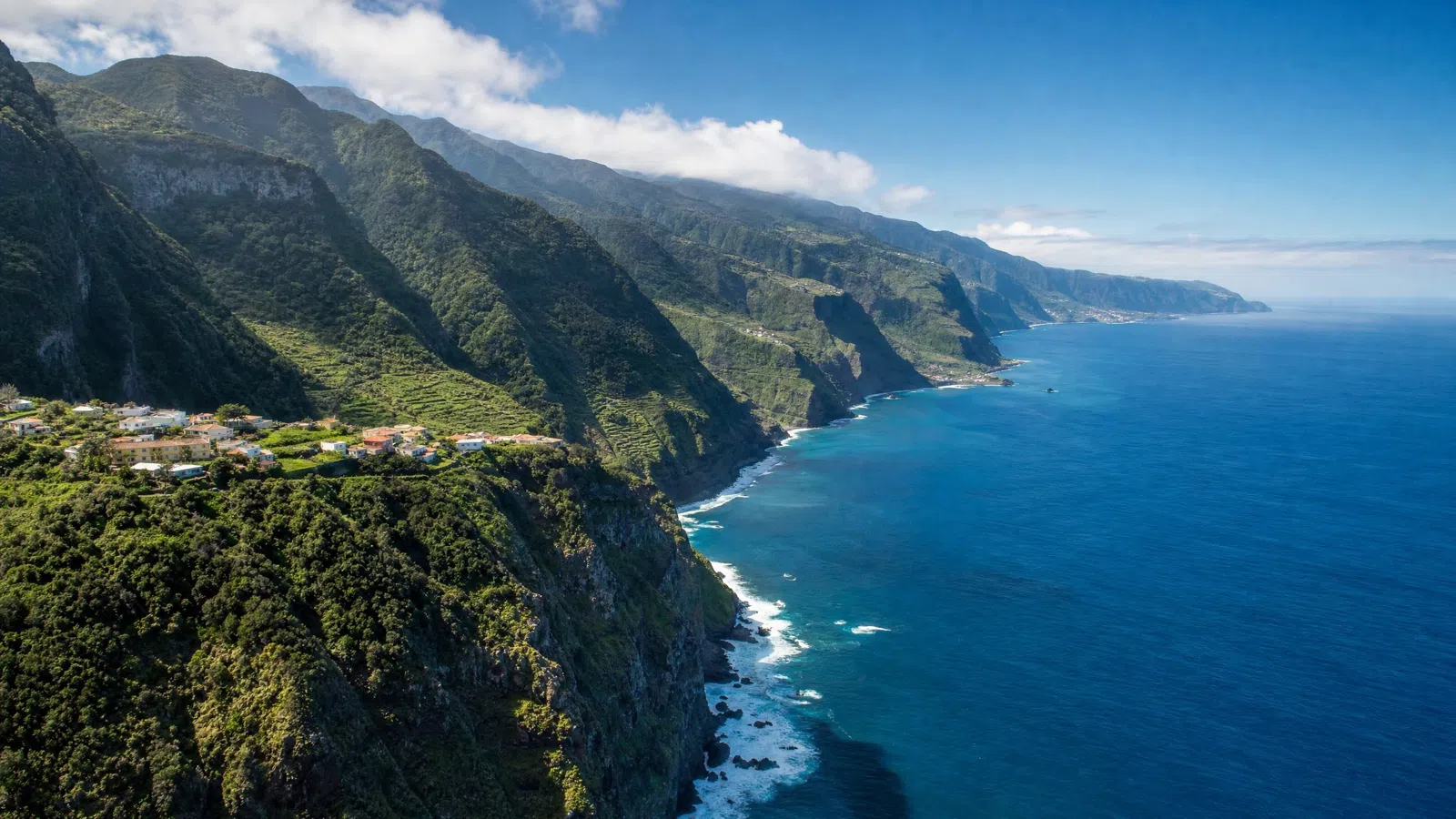
Five years after Tajogaite tore through its western flank, La Palma is still rebuilding a village that newspapers abroad have moved on from.
Plan your La Palma trip
Live prices from our booking partners.
Guests & rooms
Free cancellation on many rooms. We may earn a commission when you book.
An insider’s read on La Palma
La Palma's old money came from sugar, then wine, then silk, all shipped out through a harbour good enough that the Renaissance square behind it, Plaza de España, still ranks among the finest in the Canaries. Pirate raids in the 16th century left the island defending that wealth with cannon, and the squat Castillo de la Virgen that watched over the bay is a relic of exactly how seriously it took the threat.
The 20th century emptied villages instead of filling them: thousands of Palmeros left for Venezuela and Cuba between the 1940s and 1960s, and the island's food and surnames still carry that traffic both ways — arepas sit on menus beside goat cheese and gofio without anyone finding that strange. Volcanic eruptions have punctuated the island roughly once a generation, from San Antonio in 1677 to Teneguía in 1971 to Tajogaite in 2021, and each one has reset a piece of the map. A 1988 law protecting the night sky around the Roque de los Muchachos observatory, decades before Tajogaite, is the reason La Palma now markets its darkness as hard as its volcanoes.
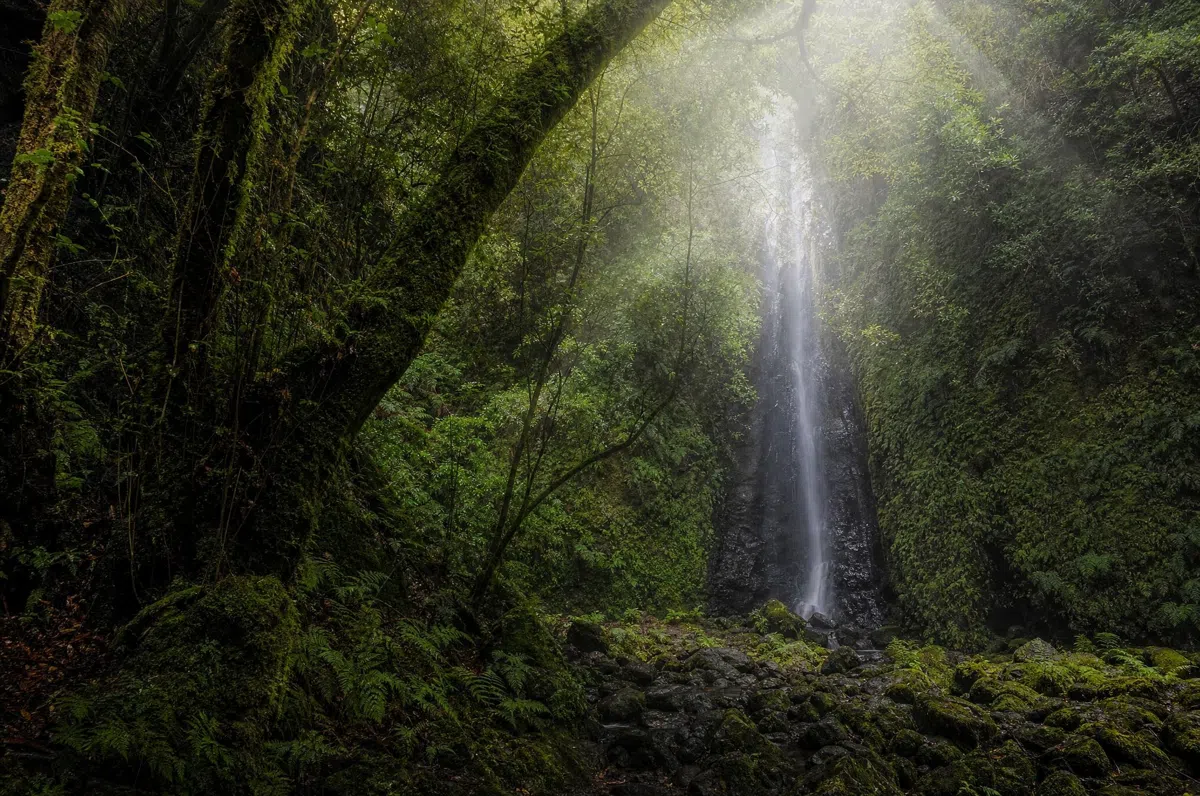
Locals call it Isla Bonita without irony, but they will also tell you
From our La Palma guide
Nine neighbourhoods, nine ways to stay
Pick the neighbourhood first and the trip follows. Each one opens its own guide, with the hotels inside it.
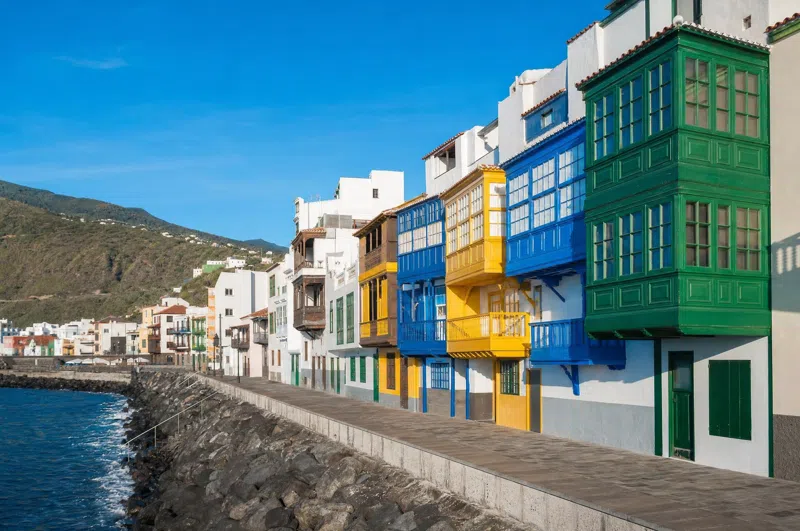
Santa Cruz de La Palma
Suits travellers who want a walkable base with real restaurants and a ferry terminal on the doorstep, at the cost of being a 20-30 minute drive from the island's best hiking and volcano country.
The capital is a working port town dressed in Renaissance stone and wooden Canarian balconies, with the Atlantic slapping directly against the sea wall below the Avenida Marítima. Traffic noise gives way fast to the quiet of the old quarter's narrow lanes, where shutters stay closed through the afternoon heat and reopen for a slow evening out.
Where to stay Old-town guesthouses and capsule hostels cluster around the port and the Plaza de España for anyone prioritising a walkable, car-optional stay.
Stay in Santa Cruz de La Palma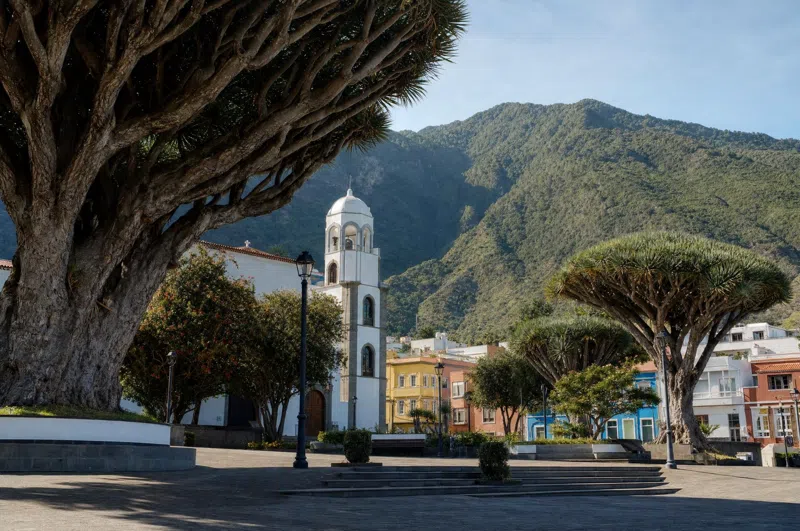
Los Llanos de Aridane
Suits anyone basing themselves centrally for hiking the Caldera or the volcano route who still wants a proper evening out; it trades sea views for convenience.
La Palma's biggest town and its only inland municipal seat, built around a Plaza de España of its own that fills with locals rather than tour groups after dark. It is flatter, busier and more functional than the capital, with the island's widest spread of everyday shops, bars and buses.
Where to stay Budget hostels and central guesthouses dominate; it is the cheapest sensible base for a car-free, bus-reliant trip.
Stay in Los Llanos de Aridane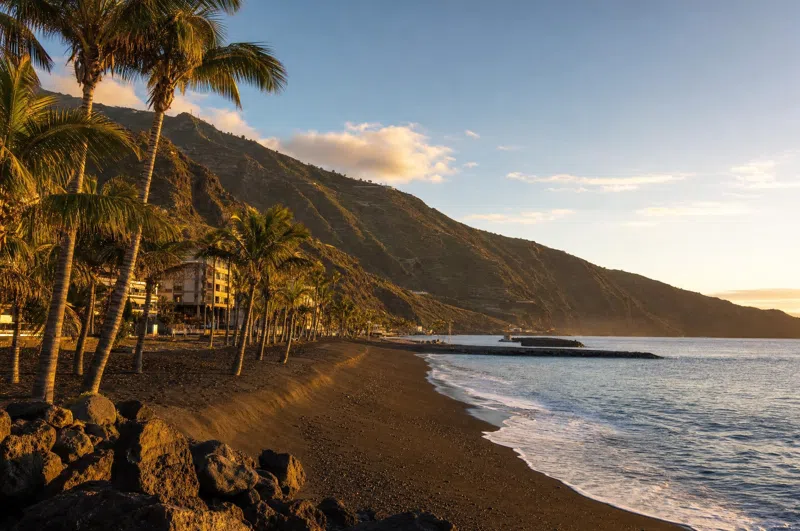
Puerto Naos
Suits travellers who want a conventional beach-resort stay and are comfortable checking current access rules first; not the place for anyone wanting to pretend the eruption did not happen.
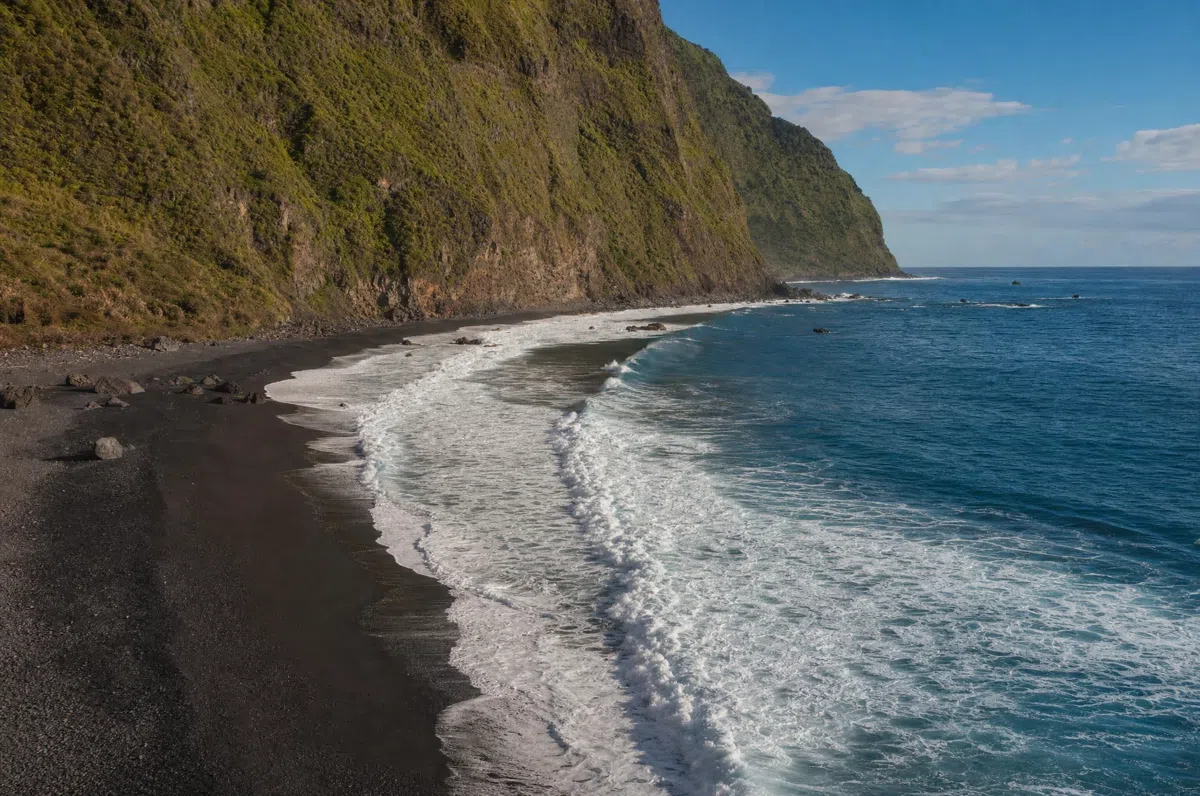
A beach resort village still living with the consequences of the Tajogaite eruption next door — the 2021 lava field sits visibly across the access road, and parts of the village remain fenced off for volcanic gas monitoring even now. What is open again is a long black-sand beach and a slowly returning strip of bars and apartment blocks.
Where to stay Resort hotels and self-catering apartment blocks run along the seafront, built for longer beach-focused stays.
Stay in Puerto Naos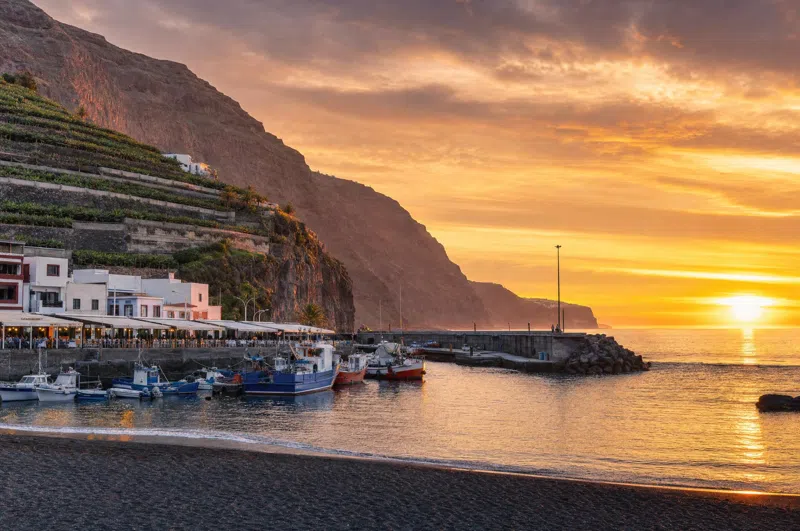
Tazacorte
Suits travellers who want a real port town with excellent seafood over a manicured resort strip, and do not mind a short drive up to the rest of the island's sights.
A small working port under steep banana terraces, with a quay of fish restaurants that fills for sunset and a genuinely good black-sand beach a short walk from the harbour. It feels looser and more local than the bigger resorts, built around the fishing fleet first and visitors second.
Where to stay One standout boutique hotel in a former sugar estate anchors the upper town; the port itself has little formal accommodation.
Stay in Tazacorte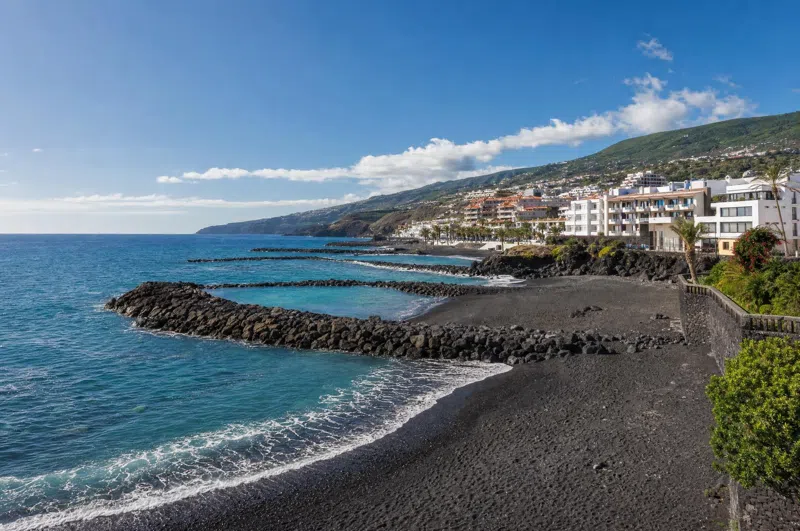
Los Cancajos
Suits anyone wanting beach time without committing to a full resort scene, or arriving on a short trip and not wanting to drive far from the airport.
A compact, calmer beach resort a few minutes from the airport, with a black volcanic-sand beach, a scattering of dive centres and a seafront walk that never gets properly crowded even in August. It is the easiest coastal base logistically on the whole island.
Where to stay A genuine range from Parador-level formality to straightforward beachfront chain hotels and garden-set boutique stays.
Stay in Los Cancajos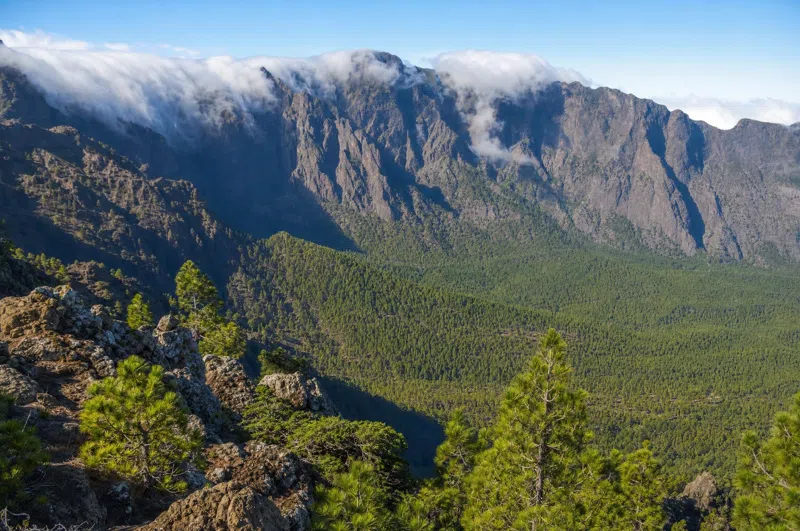
El Paso
Suits hikers and volcano-route travellers who want to be central and do not need a beach; everything coastal is a drive away in either direction.
The only one of La Palma's municipalities with no coastline, sitting in the island's geographic middle between the Caldera de Taburiente and the Cumbre Vieja ridge. Its historic centre mixes colonial churches, murals and Europe's last working hand-silk workshop, and it functions as the natural staging post for anyone tackling the volcano route.
Where to stay Rural guesthouses, country hotels and one well-reviewed hostel make it the cheapest central base on the island.
Stay in El Paso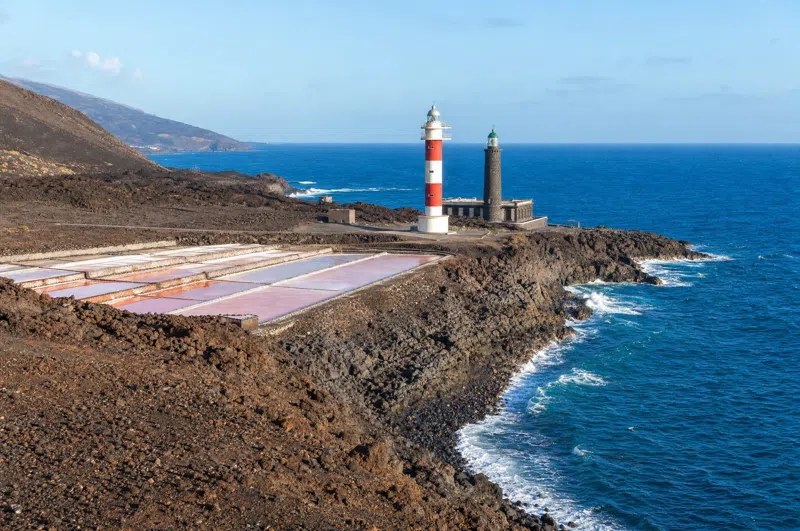
Fuencaliente
Suits wine-and-volcano travellers happy with a quiet base far from any nightlife; it is the end of the road in the best sense.
The island's southern tip, scorched and rebuilt repeatedly by its own volcanoes, San Antonio in 1677 and Teneguía in 1971, and now the centre of La Palma's wine country, with vines planted straight into black ash. A working lighthouse and salt flats mark where the lava finally meets the sea.
Where to stay Rural houses and small guesthouses rather than hotels; most visitors day-trip in from El Paso or Los Llanos.
Stay in Fuencaliente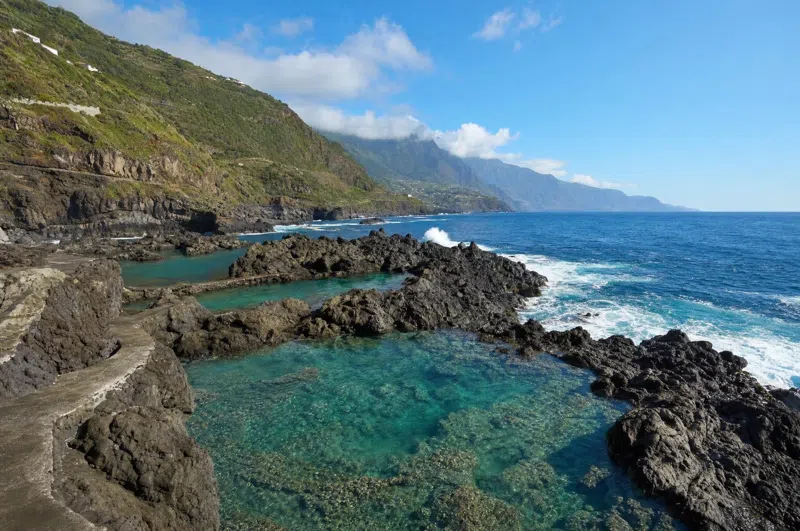
San Andrés y Sauces
Suits travellers chasing the laurisilva forest and natural pools who do not need restaurants or nightlife on the doorstep.
A fertile northern farming district split between a lively market square in Sauces and a quieter, sea-facing San Andrés, fed by the springs that also sustain the Los Tilos laurel forest above it. Banana plantations and sugarcane rum production still shape the local economy more than tourism does.
Where to stay Mostly rural houses and small rentals; there is little formal hotel infrastructure, so most visitors come for the day.
Stay in San Andrés y Sauces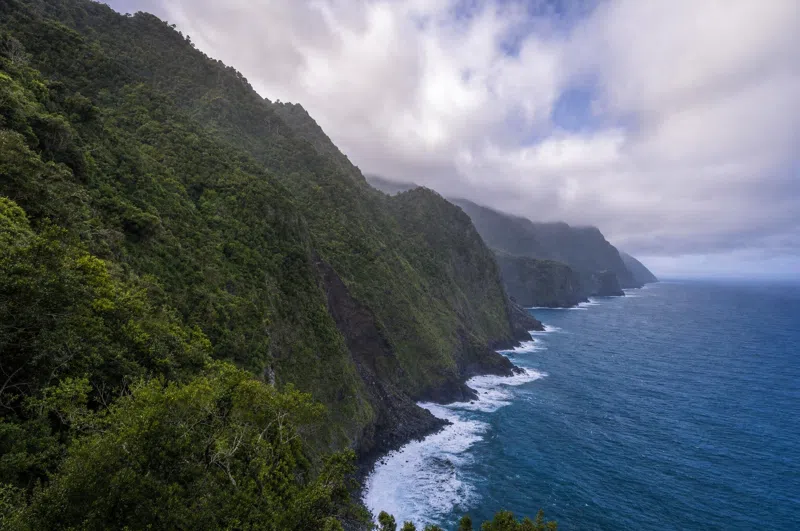
Barlovento
Suits travellers chasing genuine remoteness, the La Fajana pools and dark skies, well away from anything resembling a resort.
The island's wettest, greenest corner, named for the trade winds that hit it first and keep it noticeably cooler than the south. It is remote even by La Palma's standards, with pine forest giving way to sea cliffs at the northern tip.
Where to stay Very limited — a handful of rural houses; most people visit on a day loop rather than sleeping here.
Stay in BarloventoBook before you land
Top-rated tours and tickets in La Palma, with live prices from Viator.

Making art in La Palma - Los Llanos
from $29

Downtown Route (Price per Vehicle not per person)
from $245

Private Half Day Excursion to Lanzarote with pick-up and drop-off
from $776

Painting Sea Glue Art Workshop in Tazacorte La Palma
from $79

Lanzarote Volcano Half Day Tour with BBQ
from $148

Kayaking trail at sunset Poris de Candelaria Cueva Bonita
from $80

La Palma Wines Panorama 360 Wine Tasting
from $38

Stargazing Private Tour at Roque De Los Muchachos in La Palma
from $63
Prices from Viator; we may earn a commission when you book — at no extra cost to you. Tours are sold and operated by Viator, the merchant of record. Ratings are collected by Viator and Tripadvisor.
Book direct
Book a hotel in La Palma
Loading live availability and real-time prices…
The La Palma guide
Where to eat, drink and look, how to get around, and what locals expect of you. Open any chapter.
Where to eat
Dining
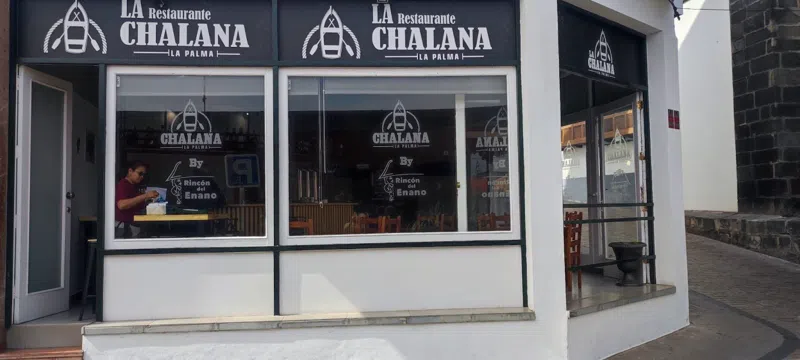
La Chalana
Built its name on battered baby squid and a daily catch board, with tables spilling toward the Avenida Marítima for anyone who wants their fish with a sea view.
Signature: battered baby squid
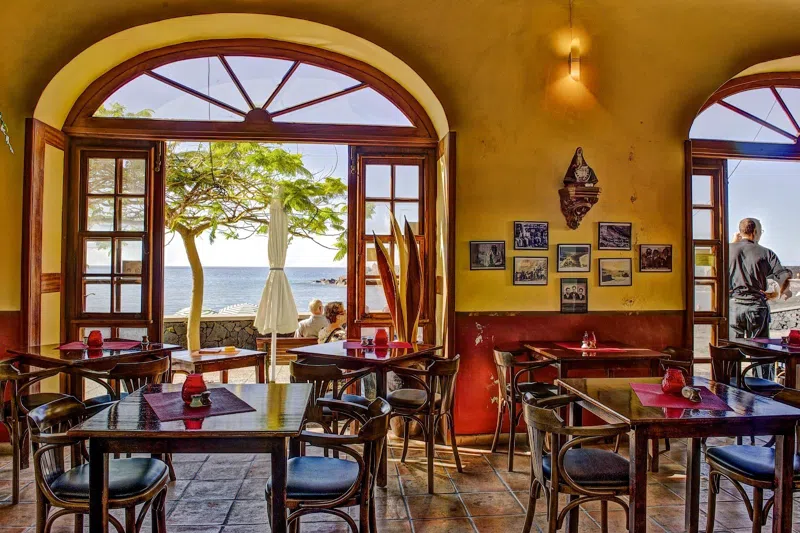
La Taberna del Puerto
A working port-side terrace that fills at sunset for grilled fish straight off the boats tied up below it.
Signature: grilled fresh catch of the day
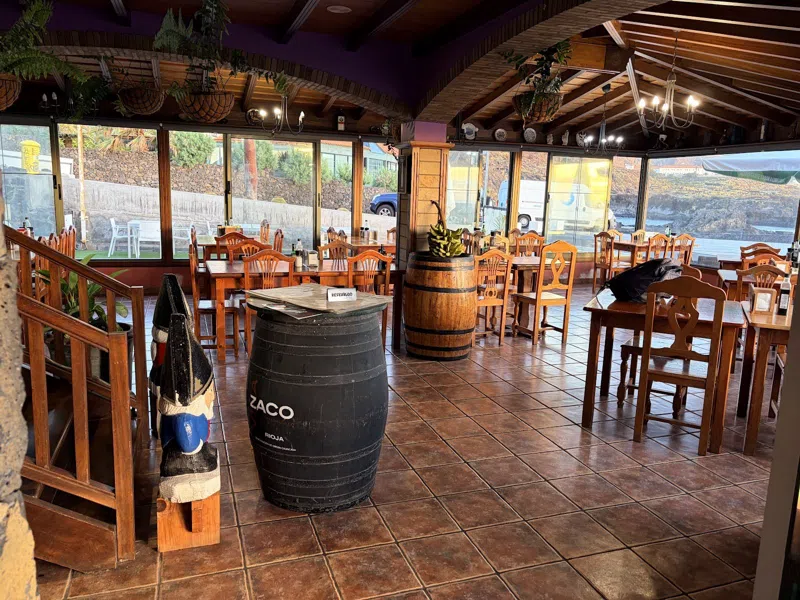
Restaurante Tiuna
The closest kitchen to Los Cancajos beach, with a wide seafood-led menu and a steady local lunch trade rather than a tourist script.
Signature: pescado a la sal (salt-baked fish)
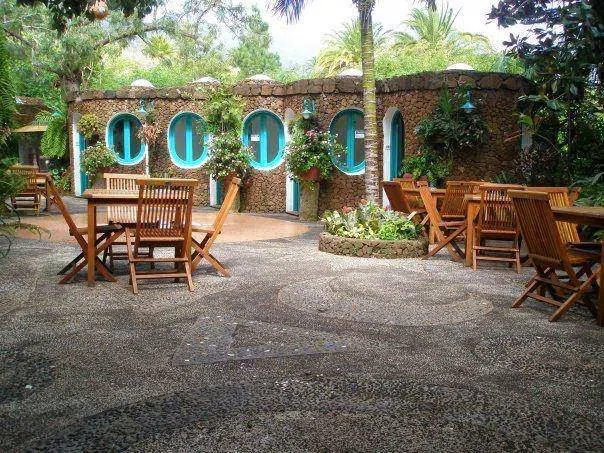
Chipi-Chipi
Dining inside real volcanic caves cut into the hillside, a Palmero institution for large groups built around gofio, grilled cheese and roast meats.
Signature: queso asado con mojo
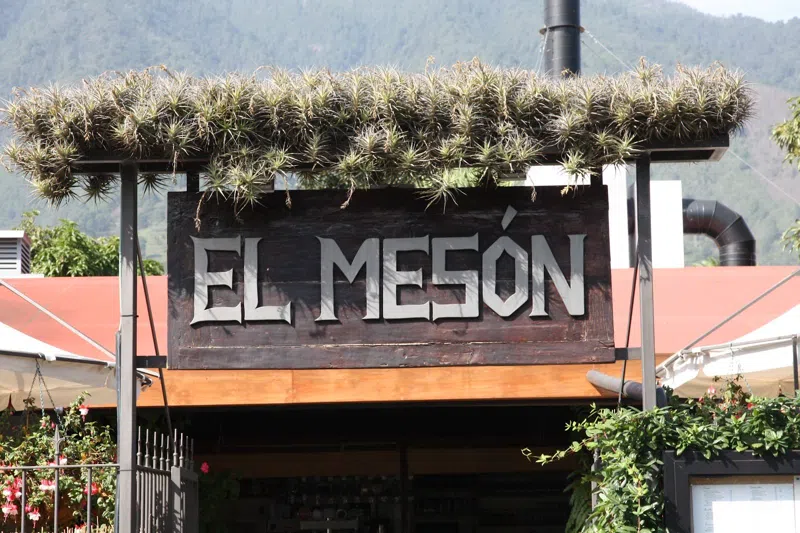
El Mesón
A value kitchen built around grilled goat cheese with mojo and a slow-cooked goat stew, with no pretension and a loyal local lunch crowd.
Signature: goat meat stew (potaje de cabra)
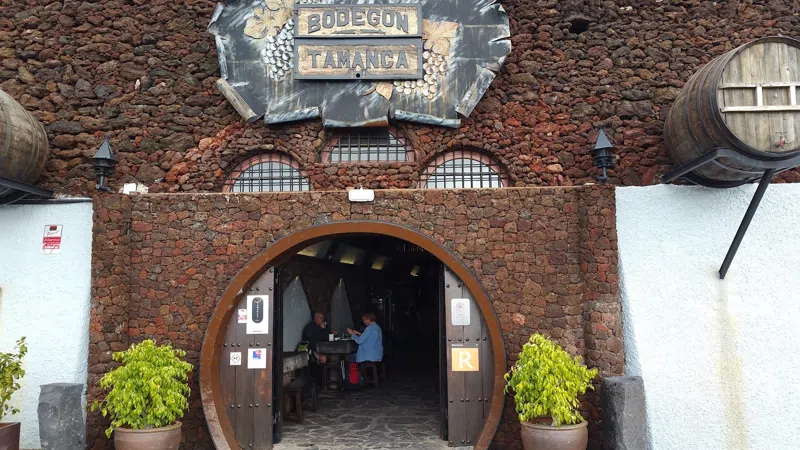
El Bodegón Tamanca
A cave-cut dining room on the volcano route, pairing barbecued meats with the house's own Tamanca wines.
Signature: barbecued meats with house wine
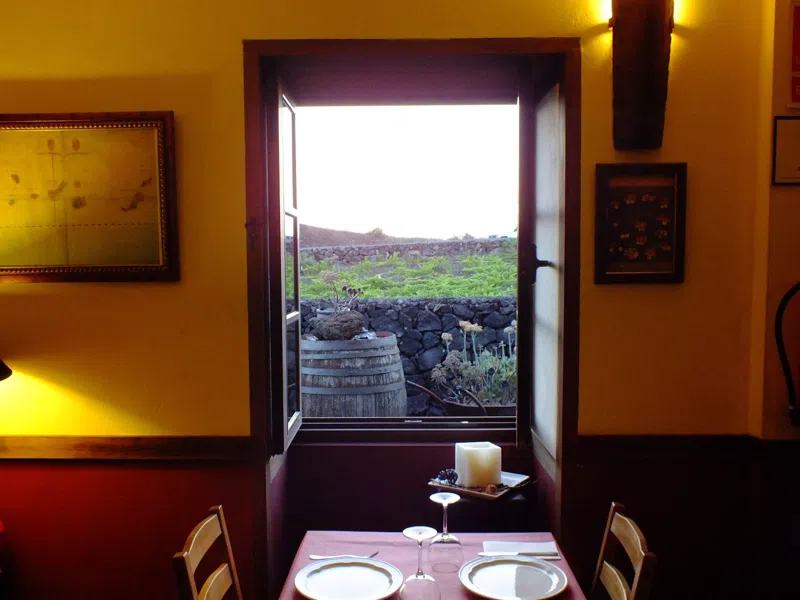
Casa del Volcán
Slow-cooked, low-temperature beef ribs paired with the island's own volcanic-soil wines, sitting right in wine country.
Signature: low-temperature beef ribs
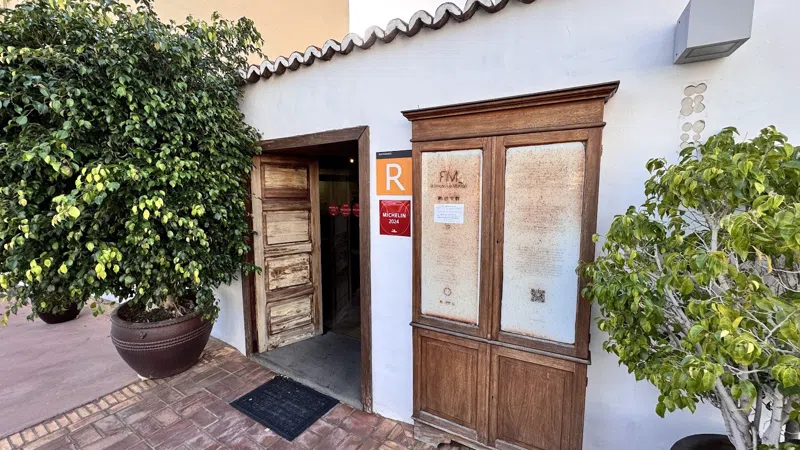
El Rincón de Moraga
A modern, careful rework of Canarian standards in an unassuming Argual address, favoured by locals over visitors.
Signature: modern Canarian tasting plates
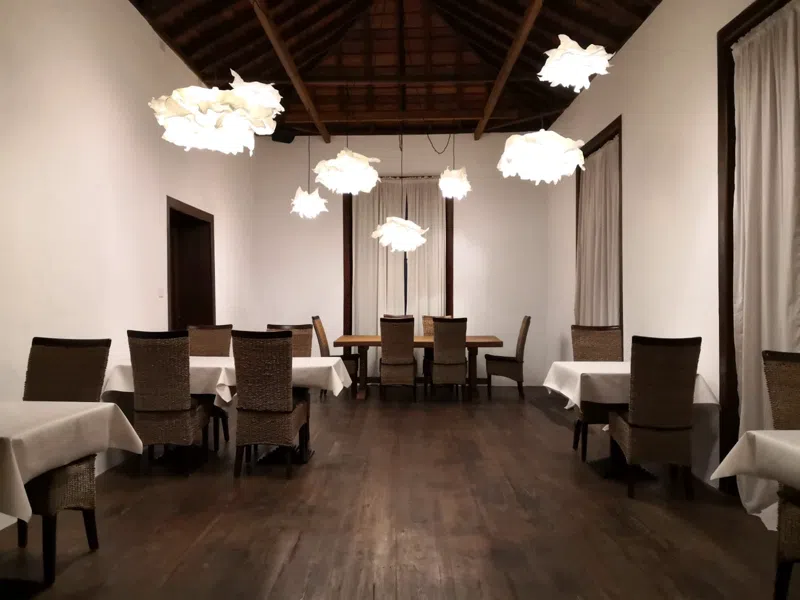
El Duende del Fuego
An entirely allergen-free kitchen built around local goat cheese and organic produce, run by chef Pedro Hernández, a rare combination on the island.
Signature: allergen-free tasting menu
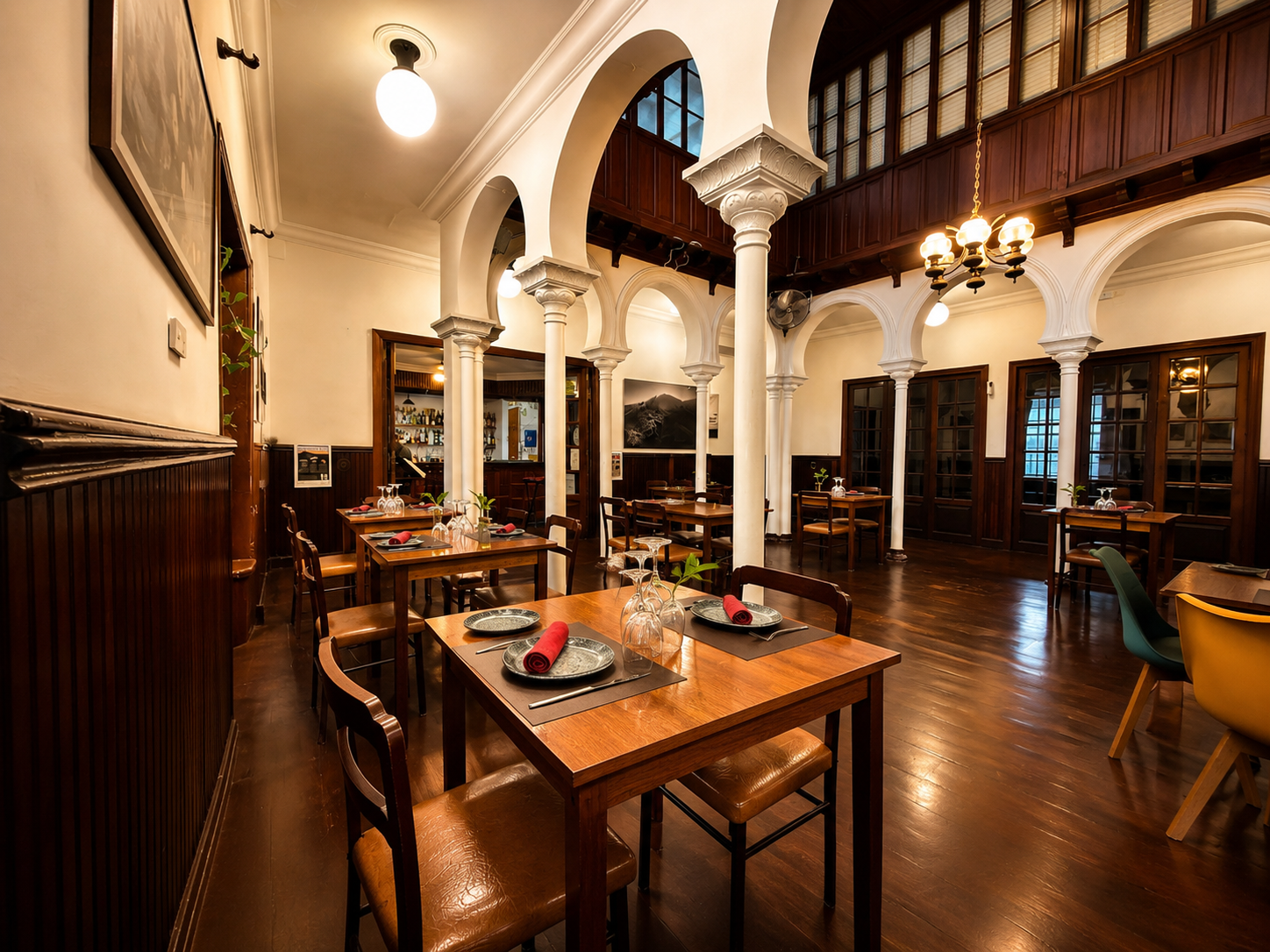
Enriclai
Fourteen seats, no fixed menu, just whatever the market gave that morning — book ahead or do not bother.
Signature: daily market-driven tasting menu
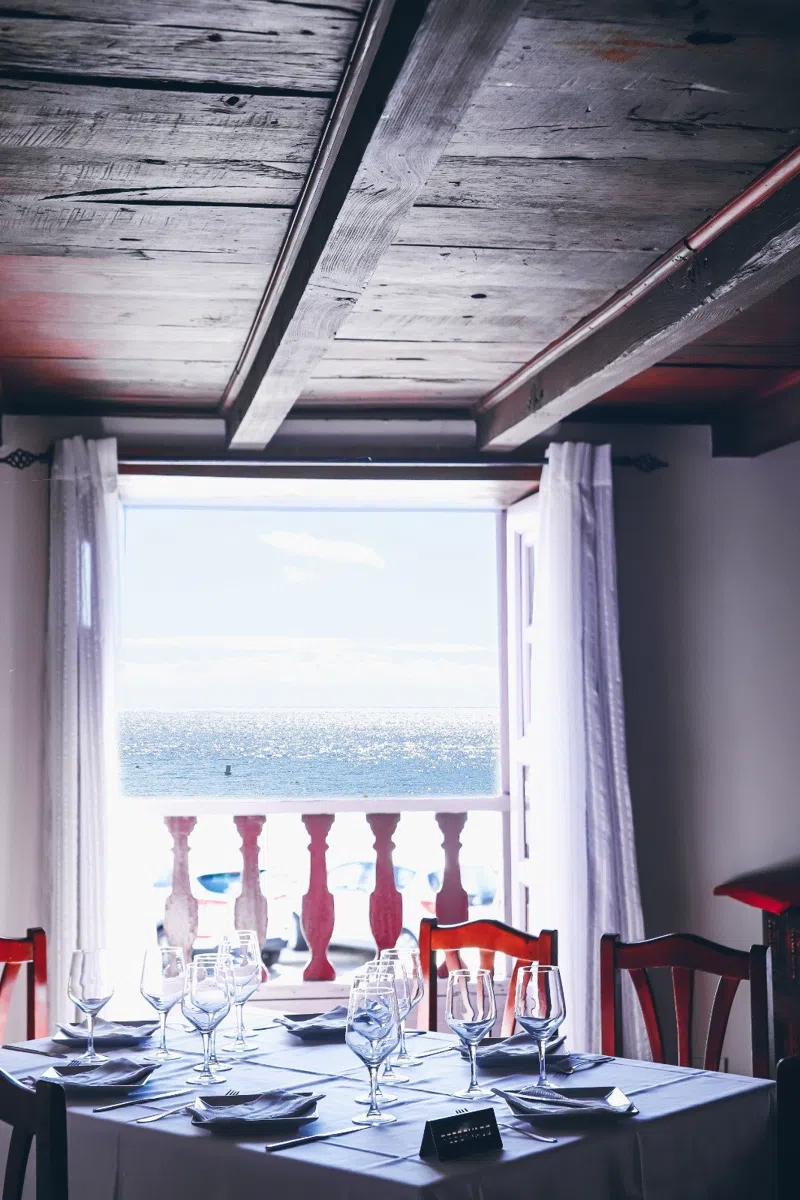
La Lonja
An 18th-century merchant house with a Canarian patio and a sea-facing dining room, one of the capital's longest-running big-night-out tables.
Signature: Canarian-Mediterranean seafood plates
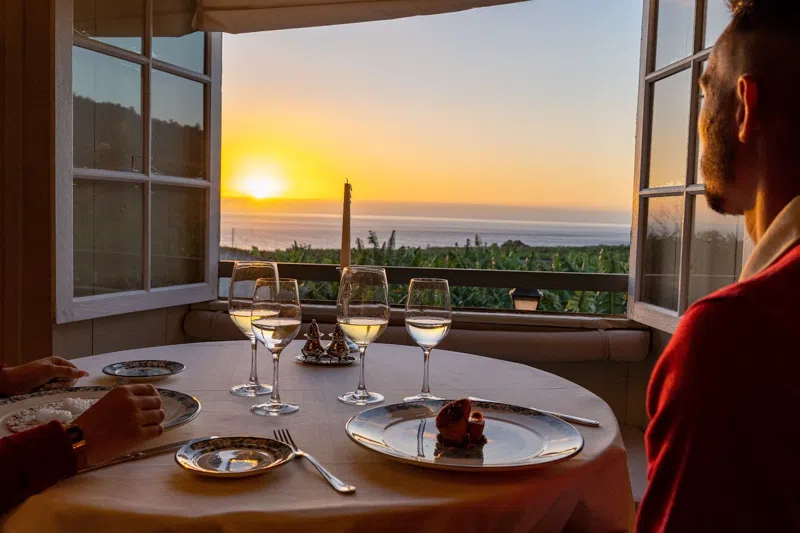
El Sitio
The restaurant inside a former sugar estate turned art-filled hotel, with Atlantic views and a kitchen that treats Canarian produce as fine-dining material.
Signature: Atlantic-view Canarian tasting menu
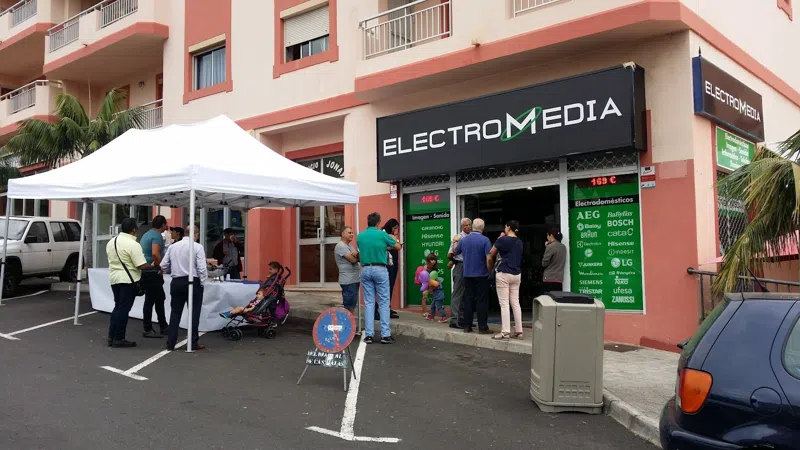
Arepera Las Nieves
Venezuelan arepas near the Naval Museum, a direct legacy of the emigration years, cheap and fast.
Signature: arepas
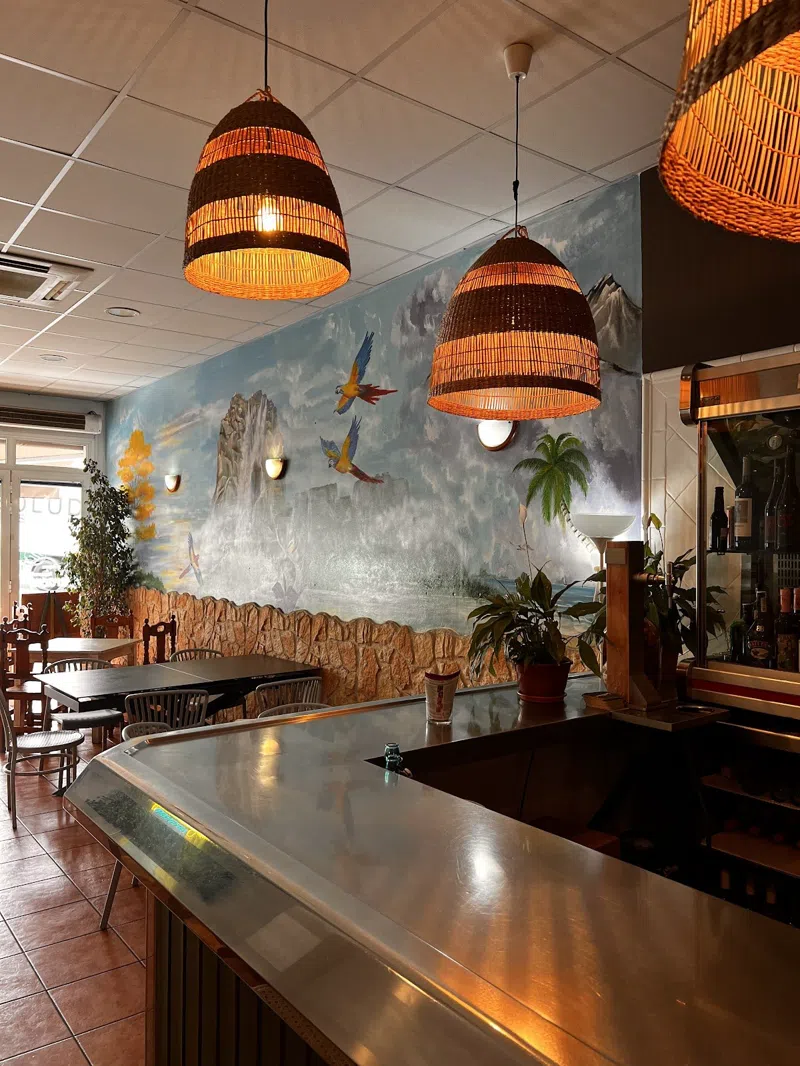
Arepera Yaracuy
Another Venezuelan-run counter with generous portions, a budget staple for hikers passing through on the volcano route.
Signature: arepas
After dark
Nightlife
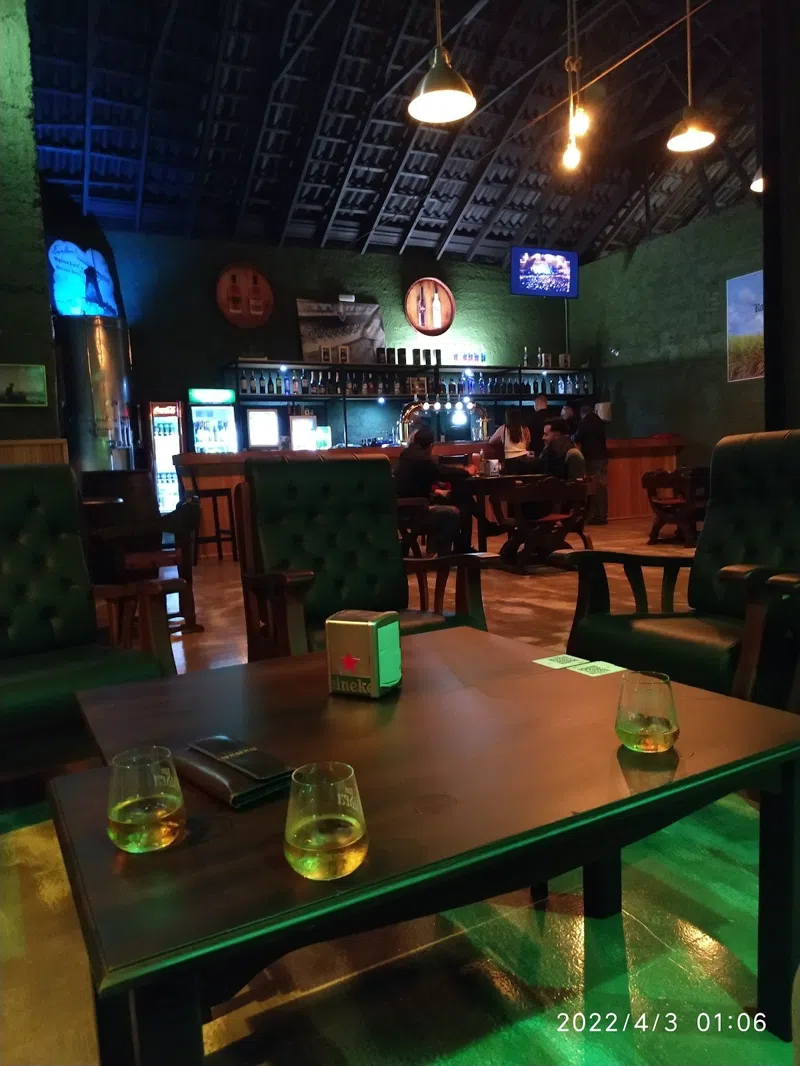
Aguaviva
A pool table, a darts machine and DJs running reggaeton into classic hits, as close as the island gets to a proper late dance floor.
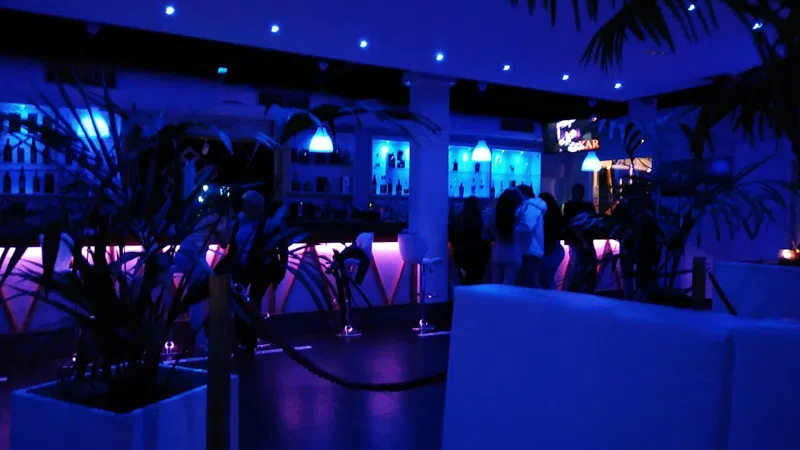
Karma Copas VIP Club
The inland valley's answer to Aguaviva and Los Llanos' main late-night draw for anyone not staying near the capital.
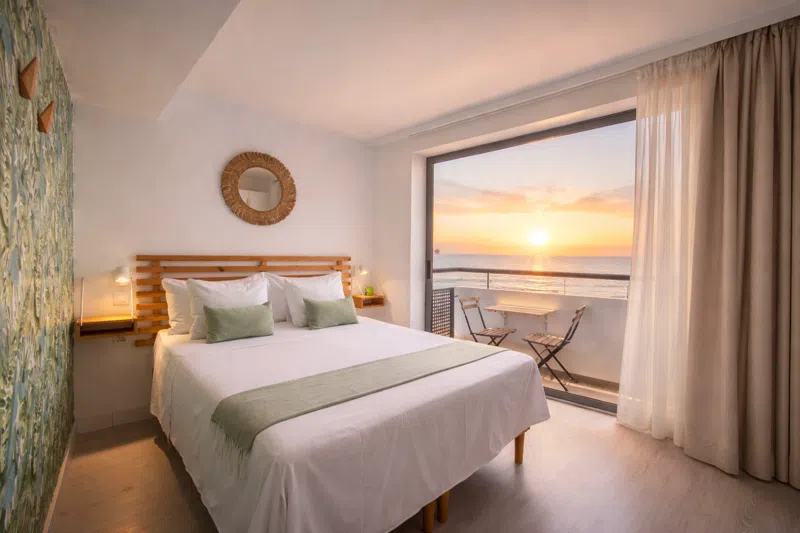
Banana Garden La Palma
A rooftop terrace over the old town, built for a slow sundown drink rather than a session, with better coffee and cocktails than the name suggests.
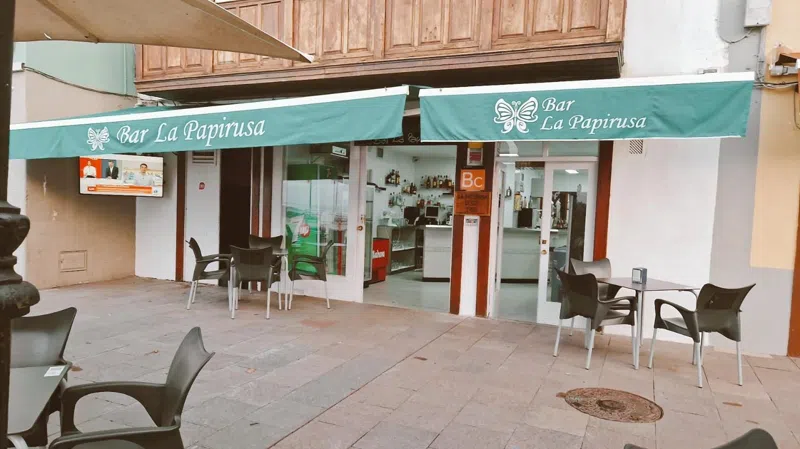
La Papirusa
A long-standing neighbourhood bar on the historic streets that has been pouring the same honest measures for years.
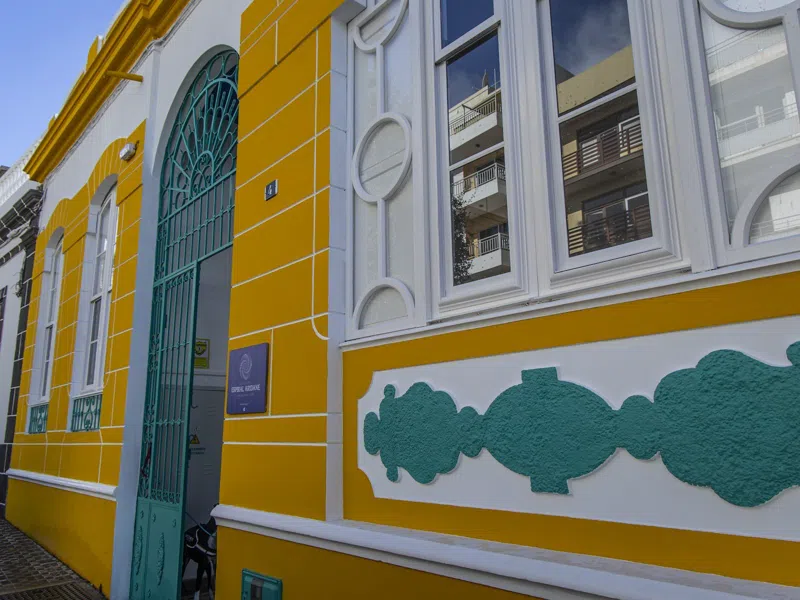
La Espiral
Tucked into Calle Calvario, the inland valley's best-regarded spot for a properly made cocktail rather than a bottled beer.
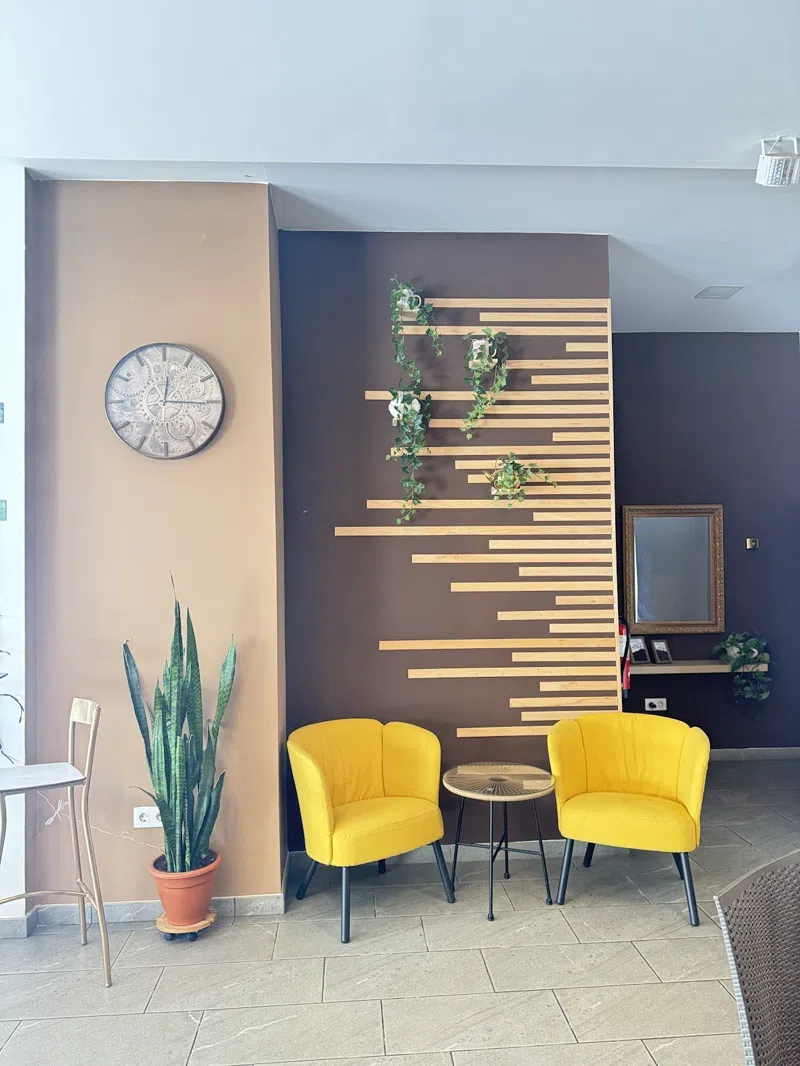
Ron Canela
A rum-forward menu built on the island's long tradition of sugarcane spirit, in the same strip as La Espiral.
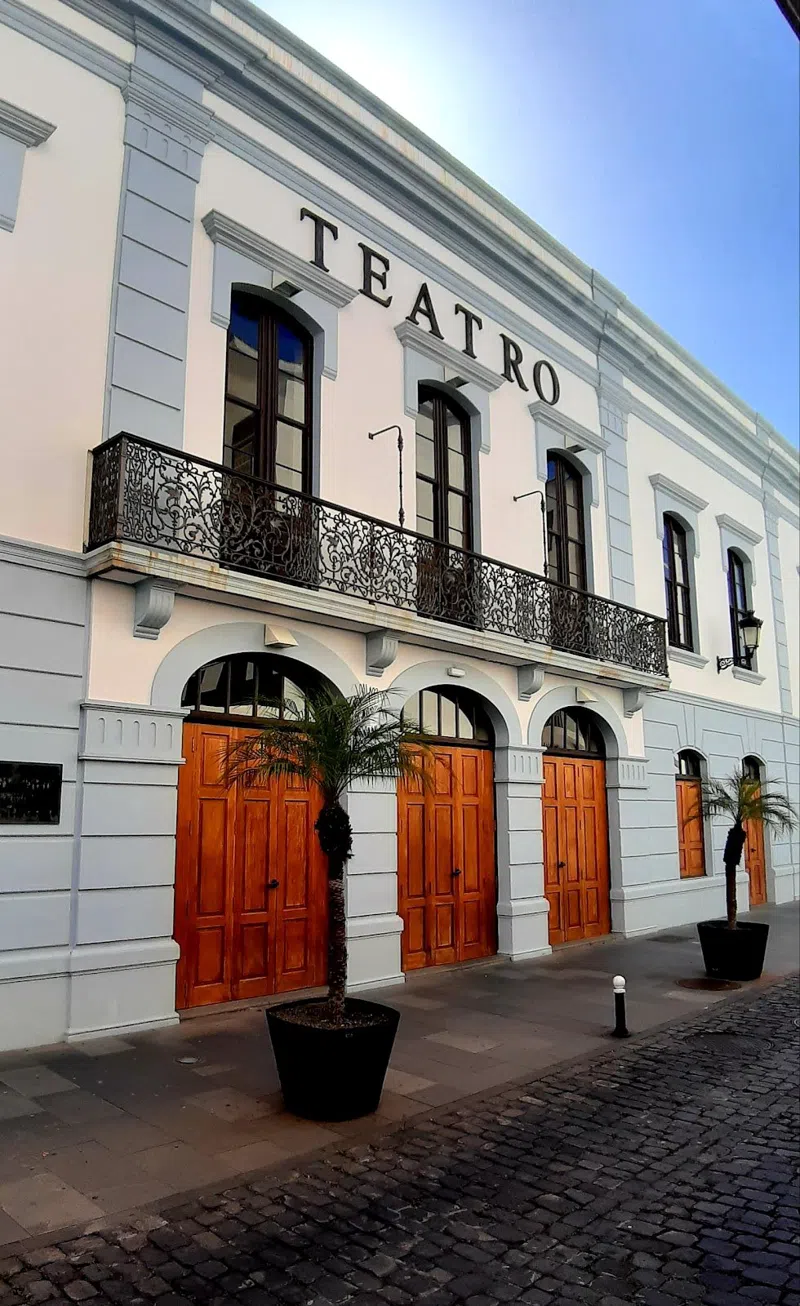
Teatro Circo de Marte
An 1871 theatre turned concert and performance hall, the island's one proper seated stage for touring and local acts.
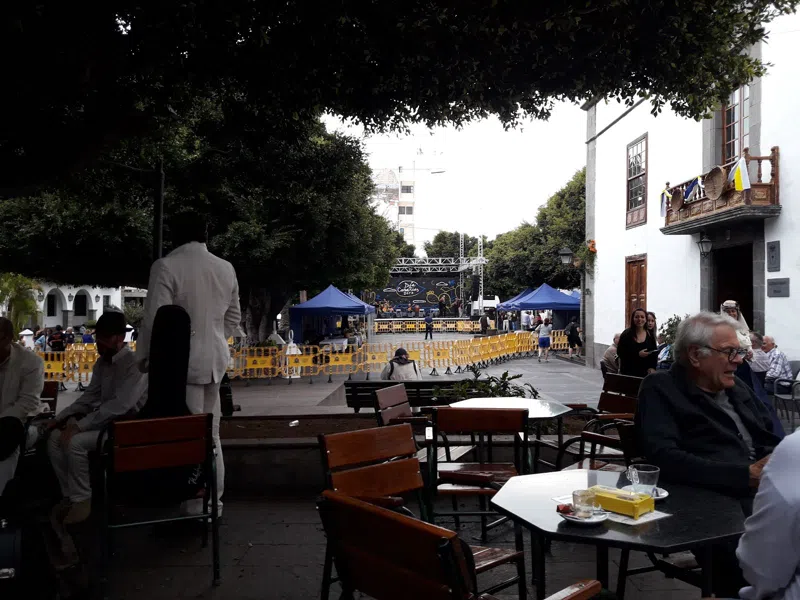
Kiosco Aridane
A bandstand kiosk in the Plaza de España that has gathered locals for live music and conversation for decades.
Art & history
Culture
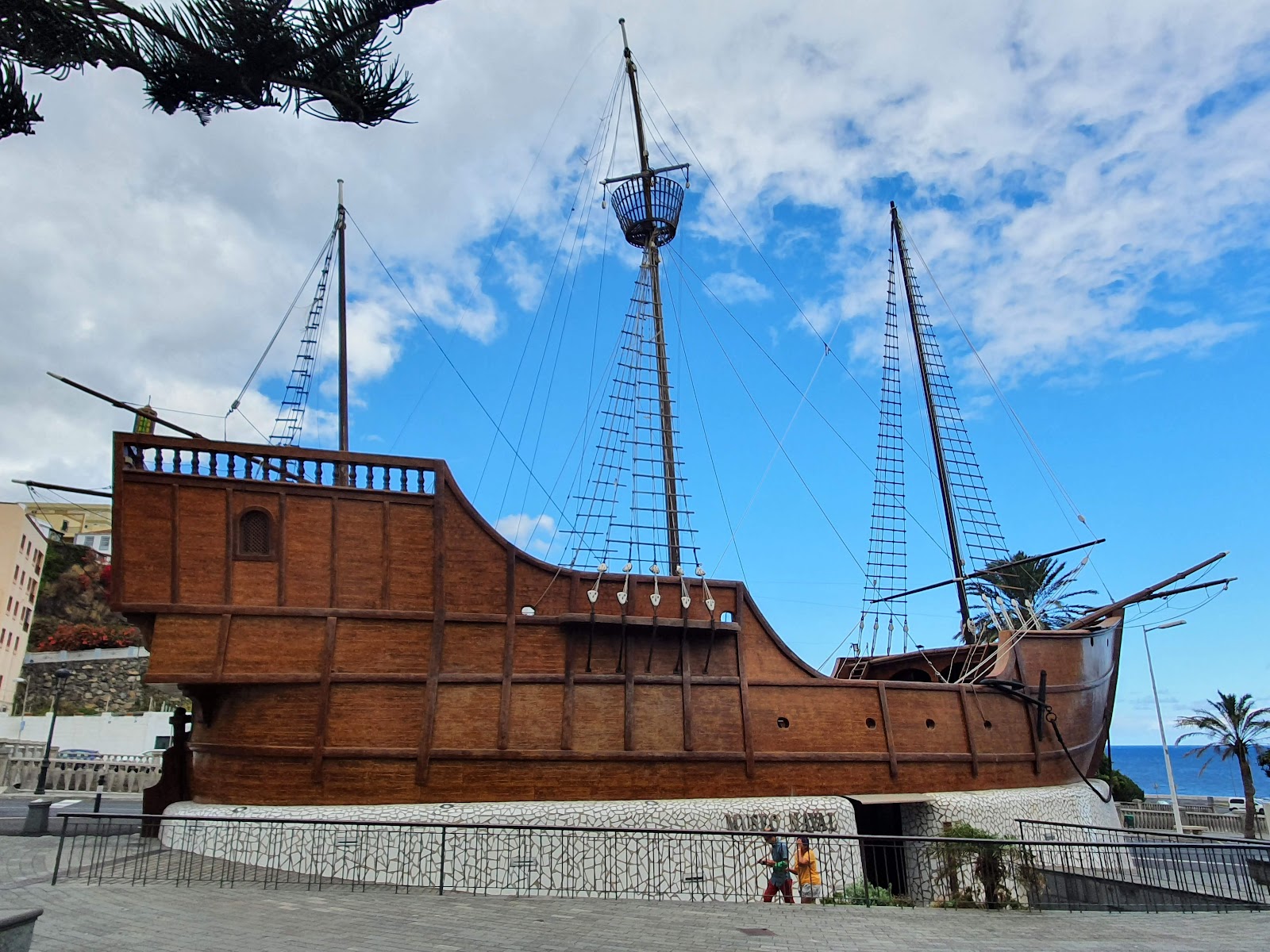
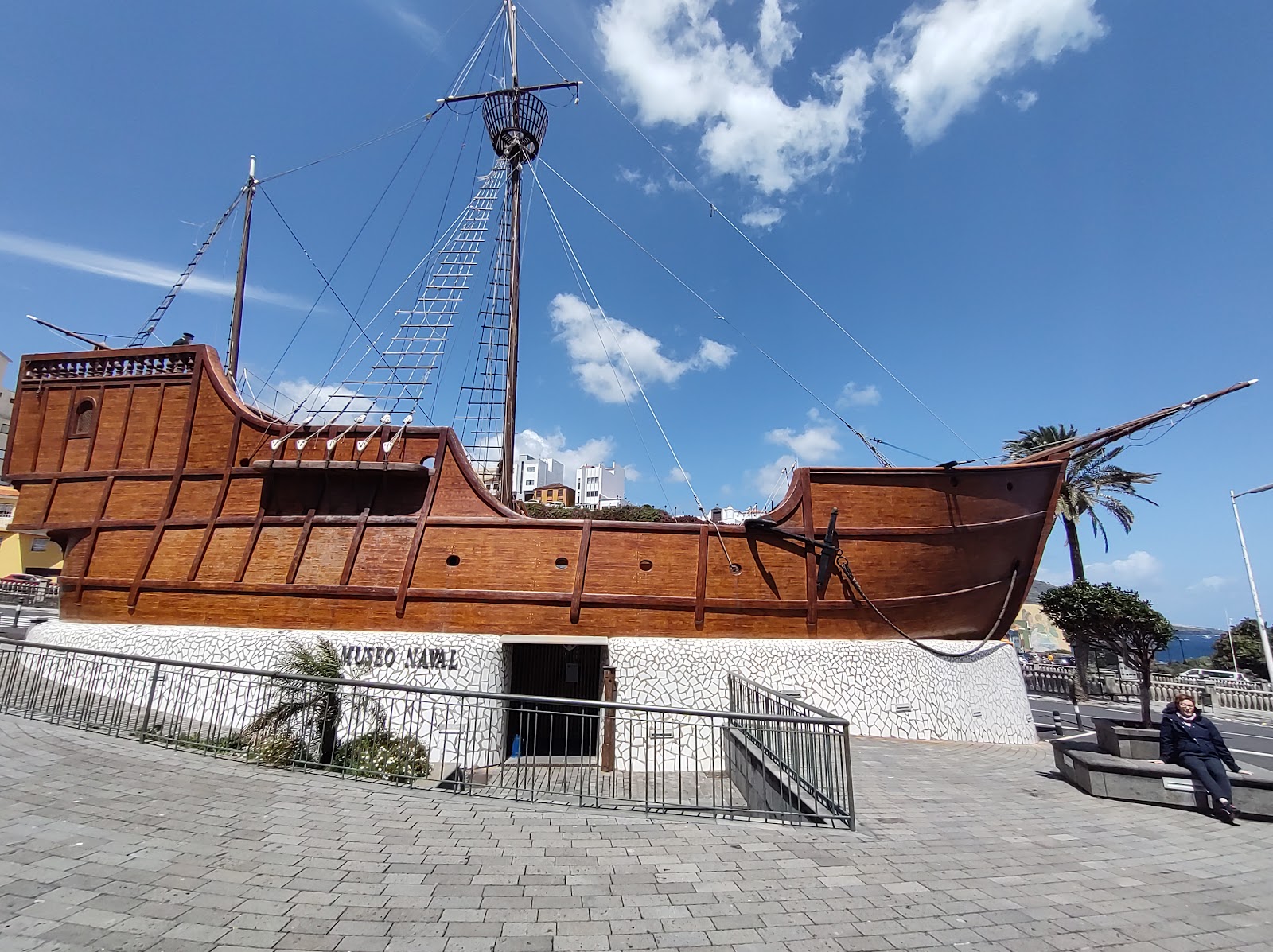
Naval Museum
Housed inside the Barco de la Virgen, a full-size concrete replica of a 1940s ceremonial caravel moored in the Alameda, with model ships and maritime history inside its hull.
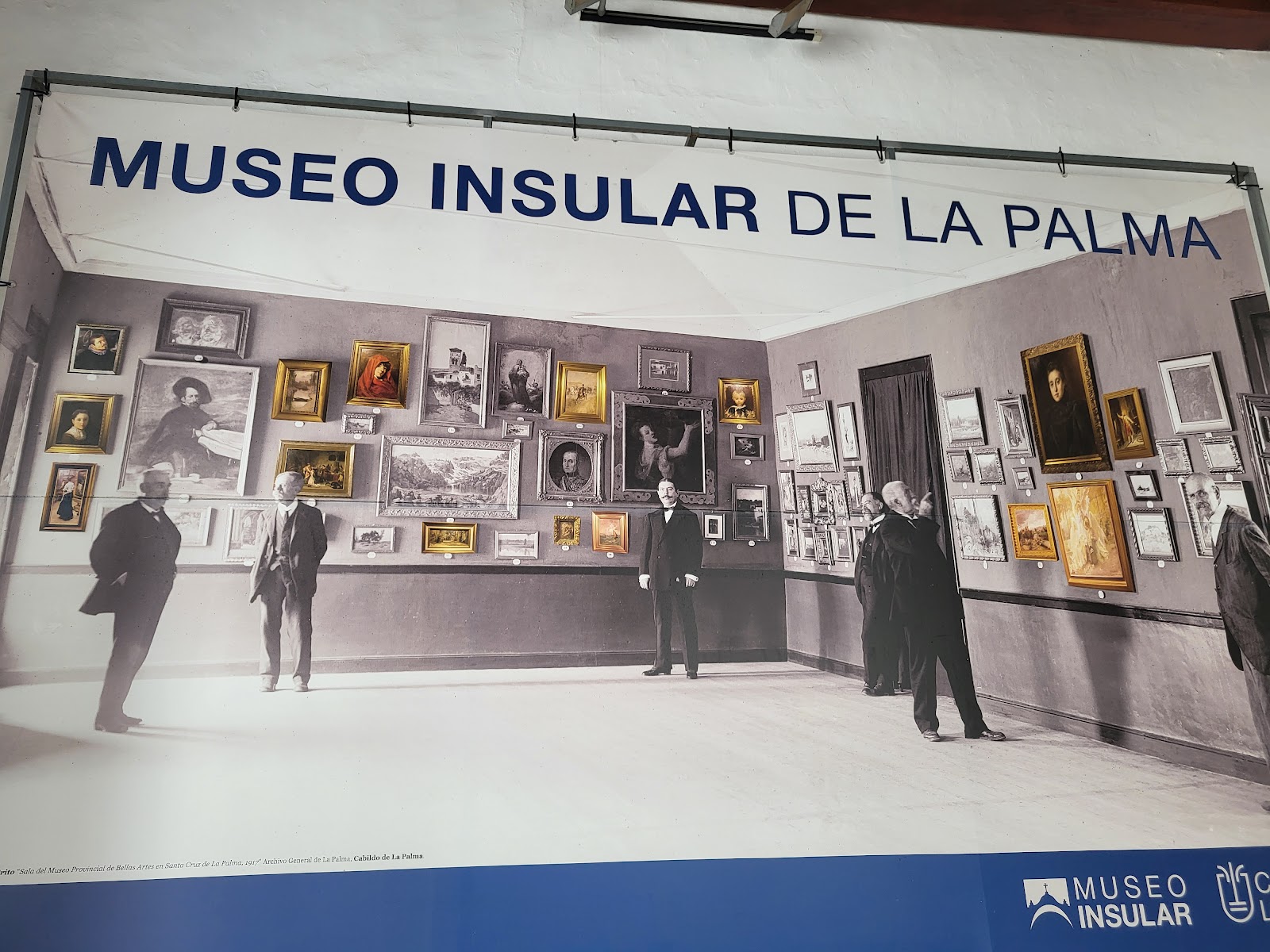
Island Museum of La Palma
A natural history and ethnography collection inside the former Convento de San Francisco, the island's one proper survey of its own geology and Guanche past.
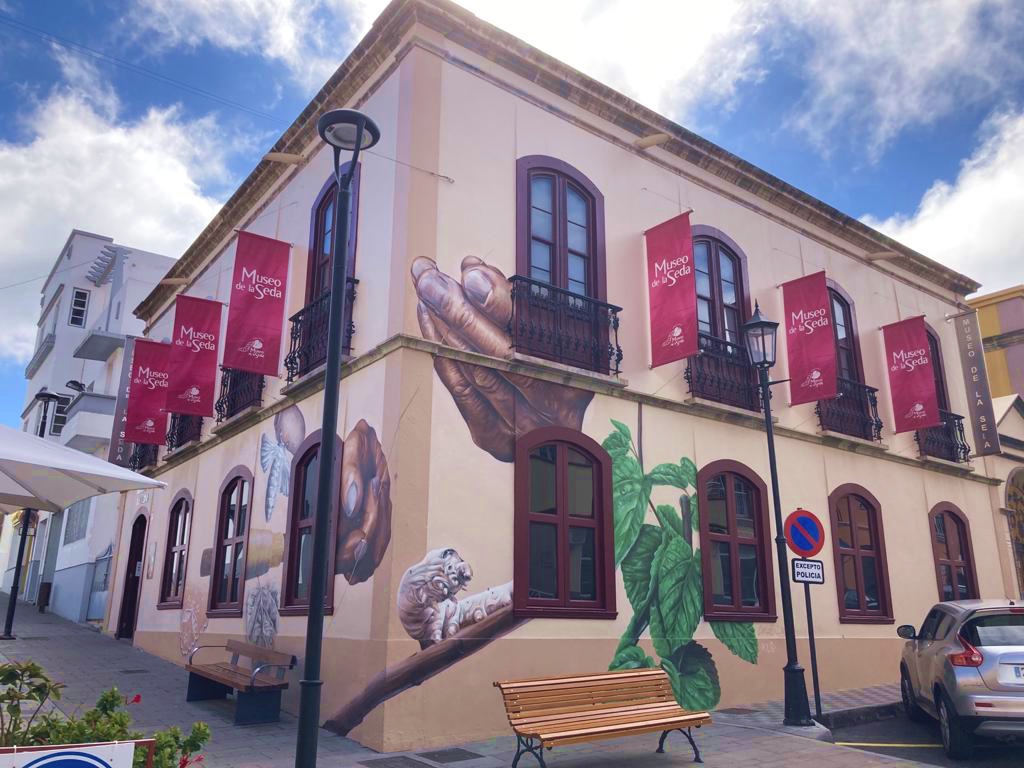
Silk Museum
The last working hand-silk workshop in Europe, with weavers still spinning thread the way it has been done on La Palma for roughly 500 years.
Centro de Visitantes Caños de Fuego
The island's own account of the 2021 Tajogaite eruption, built around two real volcanic tubes you walk into, with a rooftop view over the lava field it explains.
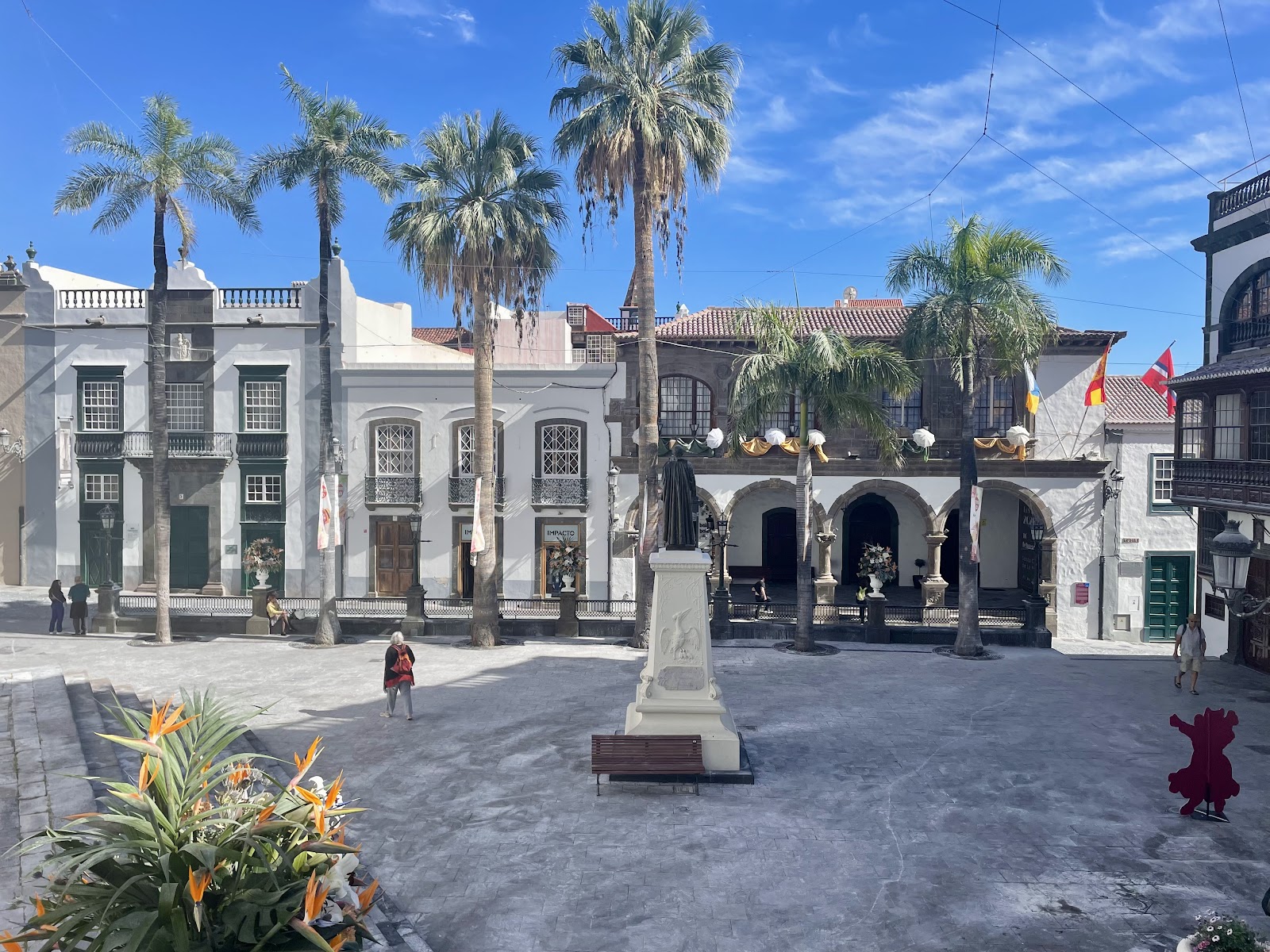
Plaza de España
Widely rated the finest Renaissance square in the Canaries, trapezoidal because the hillside it sits on would not allow anything squarer, fronted by the town hall and the Fuente de los Cuatro Elementos.
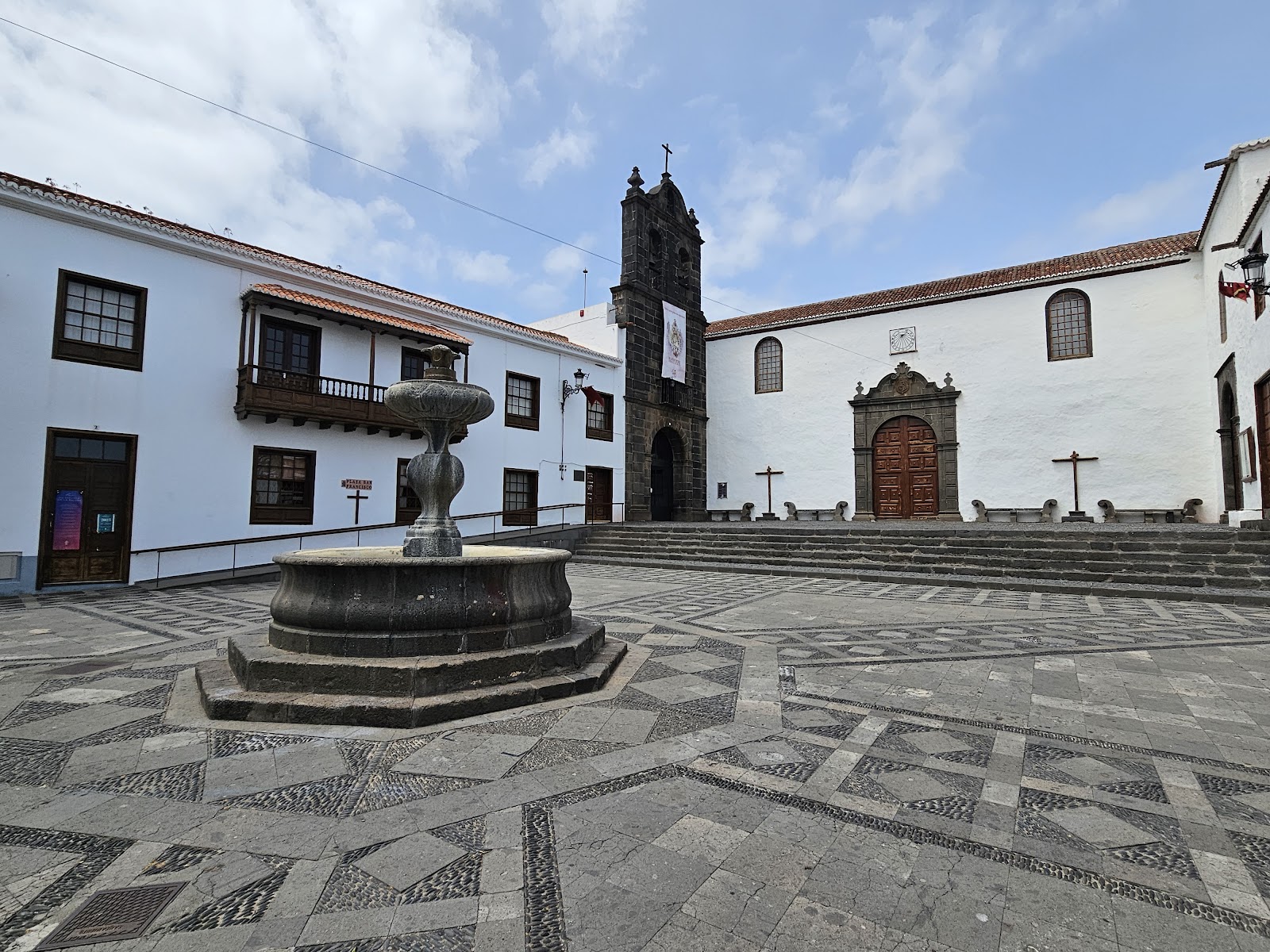
Church of San Francisco
A declared historic monument holding a 16th-century Flemish sculpture group and an 18th-century carved Christ, the architectural anchor of the old convent that now also houses the Island Museum.
Castillo de la Virgen
A squat 17th-century fort built after repeated pirate raids, more a statement of intent than a serious fortress by the time it was finished.
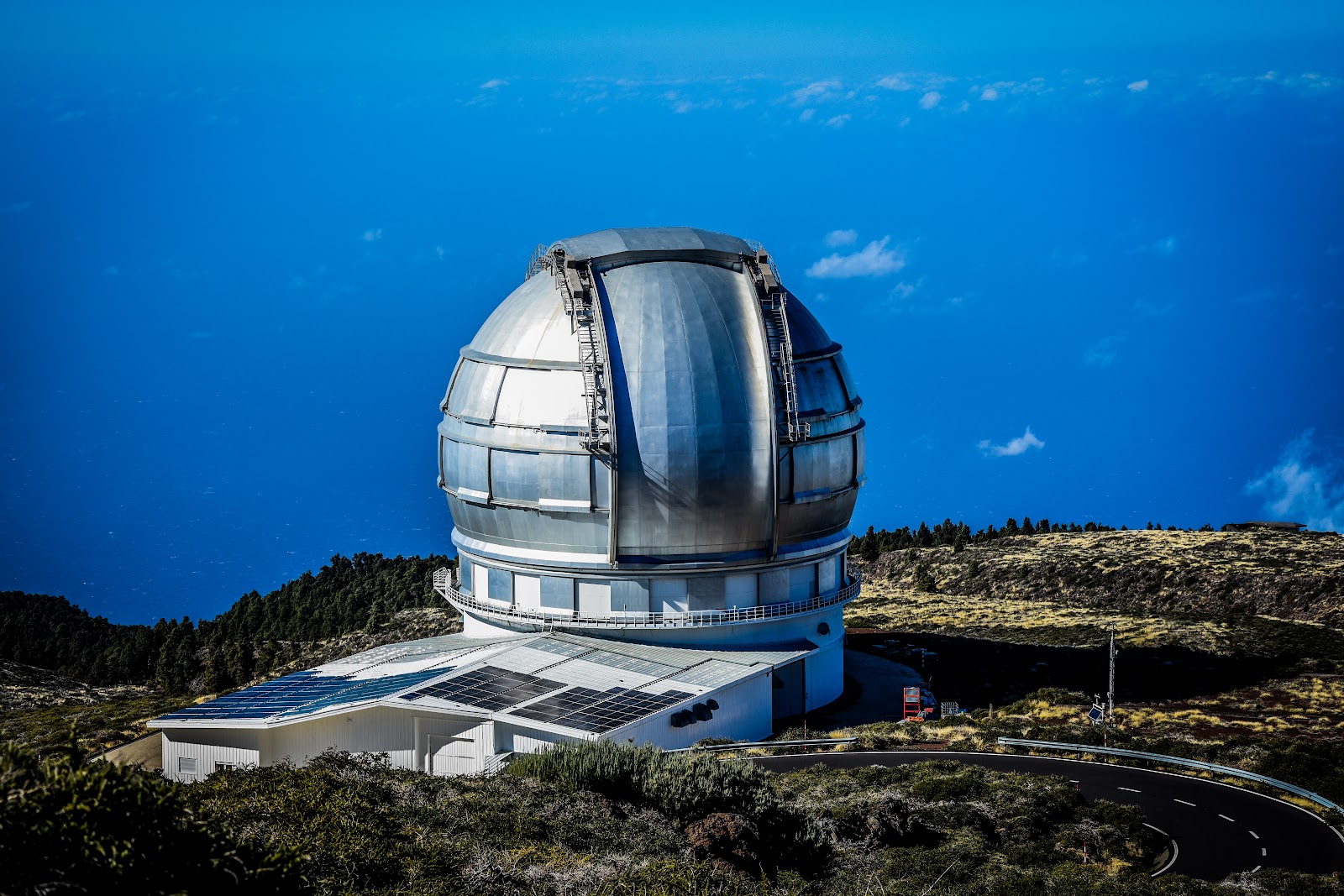
Roque de los Muchachos Observatory
The highest point on the island at 2,426 metres and home to some of the world's most important telescopes, built here because the air above La Palma is this clear and this dark.
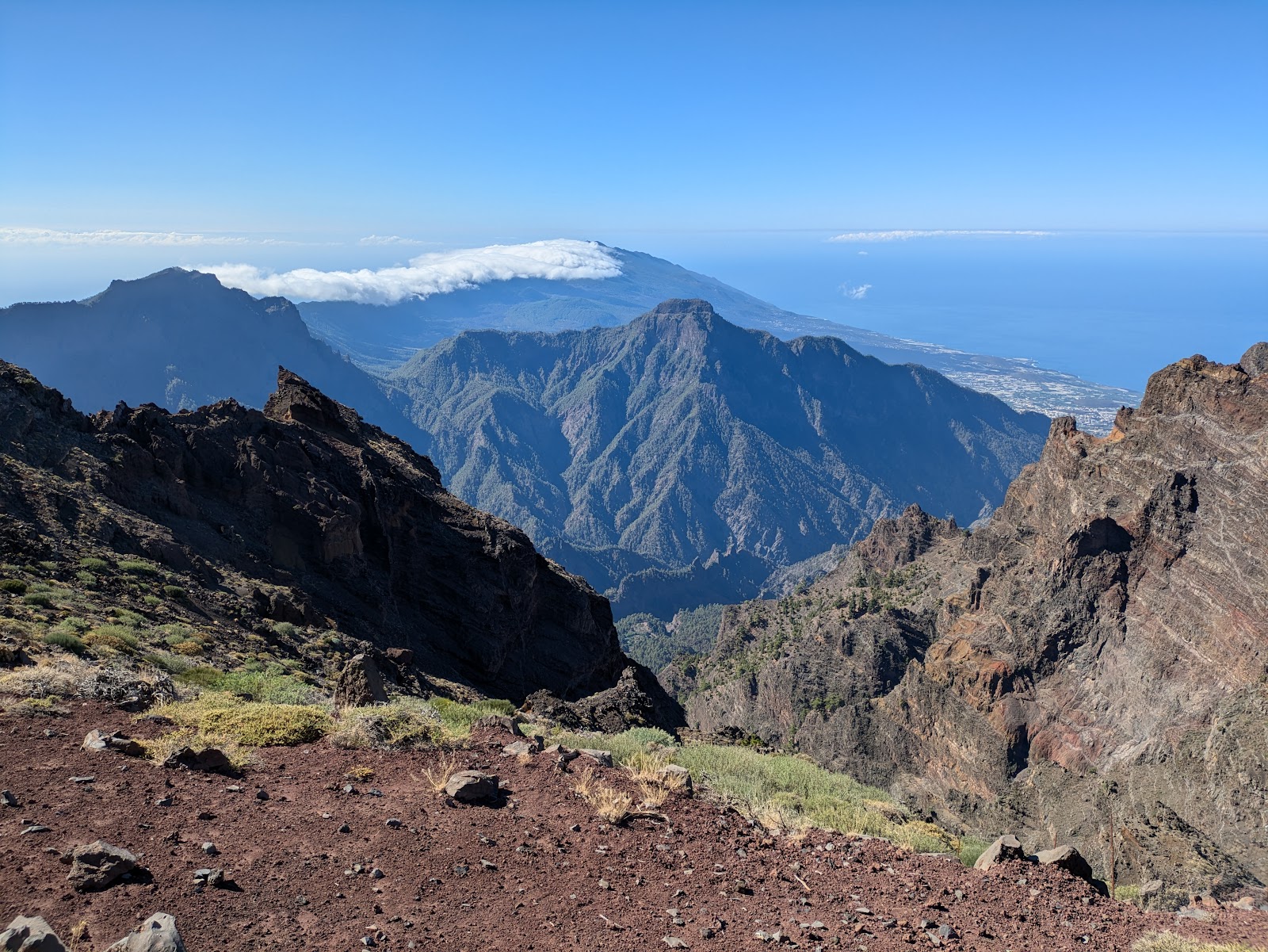
Caldera de Taburiente National Park
A vast erosion crater several kilometres across, with the Cascada de Colores streaked orange and green by mineral-stained water deep inside it.
Timing
When to visit
Spring
March to May is the driest, clearest stretch for hiking, with wildflowers on the volcanic slopes, strong long-distance visibility and rooms easier to find before the summer surge.
Summer
June to August is the warmest and busiest season, with an island-wide run of local fiestas and, once every five years (next due 2030), the Bajada de la Virgen de las Nieves pilgrimage.
Autumn
September and October stay warm with thinning crowds, and Fuencaliente's wine harvest, the vendimia, runs through this stretch.
Winter
December is the wettest month, with cooler, changeable weather at sea level and a real chance of cold or snow at the Roque de los Muchachos summit, though skies are often at their clearest between rain systems.
What it costs
Budgeting
Logistics
Getting around
From the airport
La Palma Airport (SPC) is the island's only airport, on the east coast near Los Cancajos, about 8km south of the capital. Bus line 500 runs to Santa Cruz de La Palma roughly hourly in around 35 minutes; a taxi covers the same run in 10-15 minutes. Car rental desks operate from the terminal, and picking a car up here is the easiest way to start a trip that depends on one.
Public transit
Transportes Insular La Palma (TILP) runs guaguas, the island's buses, to every municipality, but frequency drops sharply outside the Santa Cruz-Los Llanos corridor, with some rural northern and southern routes down to a handful of departures a day and an early last bus back.
Passes & tickets
There is a reloadable Tarjeta Monedero fare card and discounted bono ticket bundles rather than an unlimited day pass, worth it only for anyone relying on buses for several days running; most visitors driving a hire car will not need either.
On foot
Santa Cruz de La Palma's old town and Los Llanos' centre are genuinely walkable. The resort strips at Los Cancajos, Puerto Naos and Tazacorte are each walkable within themselves but not to one another. Beyond the towns, the island is built for a car, not a pedestrian.
Local etiquette
Safety & etiquette
- Lunch service often stops mid-afternoon and does not restart until evening in smaller villages — eat on island time, not city time.
- Dress modestly inside churches and the Island Museum's conventual spaces; swimwear belongs on the beach, not in town.
- A quiet greeting on entering a small bar or shop is expected, not optional, and goes a long way with older Palmeros.
- Respect any taped-off or signed volcanic-gas zone around Puerto Naos without exception — these are enforced for real safety reasons, not tourist theatre.
Travel smart
Practical tips
- Book your hire car weeks ahead in July and August — the island's small fleet sells out well before the hotels do.
- Fill the tank before heading into the north or south tips of the island; petrol stations thin out fast outside Santa Cruz and Los Llanos.
- Pack layers for the Caldera and the Roque de los Muchachos — the summit can be far colder than the coast and cloud can roll in within minutes.
- Check the current Puerto Naos access status with the Cabildo before basing a stay there — the rules on the beach and the restricted zone have changed more than once since 2021.
- Buy the reloadable Tarjeta Monedero bus card at the Santa Cruz station if you are relying on guaguas; it saves scrambling for coins and shaves a chunk off each fare.
- Reserve a table at Enriclai days ahead — fourteen seats and no written menu means it fills fast on word of mouth alone.
- Carry cash for small village bars and the Villa de Mazo weekend market; card terminals are inconsistent outside the two main towns.
Before you go
La Palma FAQs
Is Puerto Naos safe to visit?
Parts of it, yes. The beach and much of the village reopened in stages after carbon dioxide levels from the 2021 eruption fell, but the worst-affected zone stays closed, and conditions have changed more than once, so check current status before planning a stay built around it.
Do I need to rent a car?
Realistically, yes. Buses reach every municipality but run infrequently outside the Santa Cruz-Los Llanos corridor, and most of what makes the island worth visiting, the Caldera, the volcano route, the northern pools, sits well outside easy walking distance of any bus stop.
How do I get to La Palma?
By air into La Palma Airport, with connections through Tenerife, Gran Canaria or mainland Spain, or by sea on the inter-island ferry network from Tenerife's Los Cristianos port, a crossing of around two and a half hours.
Can I visit the Tajogaite volcano?
Yes, with an authorised guide through the Caños de Fuego visitor centre or a licensed tour operator. Independent access to the cone itself is restricted because of monitored volcanic gas and unstable ground.
Is La Palma good for a first trip to the Canary Islands?
It rewards people who want hiking, dark skies and a quiet, rural island over a beach-and-nightlife holiday. Anyone wanting big resorts, shopping or a lively bar scene will find slim pickings here.
When can I see the stars at Roque de los Muchachos?
The professional observatory itself only runs daytime guided tours, so night stargazing happens with portable telescopes at dedicated dark-sky viewpoints lower down, usually booked through a local astronomy tour.
What is the best time to hike?
April to June and September to October give the most reliable dry weather and the clearest long-distance visibility for route-finding on exposed ridges like the Ruta de los Volcanes.