
La Gomera neighbourhood guide
Laguna Grande, La Gomera's clearing in the laurel forest
From one dirt car park at 1,250m you can reach fifteen basalt stones, a 900m loop into the moss and a 10km trail to the island's highest point.
Fifteen low flat basalt stones lie in a ring on the grass at Laguna Grande, one block set at the centre. Gomeran ritual gatherings carried on here into the 1950s, until the Church recast them as witchcraft. The clearing sits at 1,250m, and coach parties off the ferry stop here every day.
The clearing and its stone circle
La Laguna Grande (zona recreativa) is the only true clearing in a Tertiary-era laurel forest, flat grass ringed by wind-bent laurel and tree-heath. The stones sit out on the open ground where the island's bailadero gatherings were held. Mist comes through the trees often, and the forest closes in on every side of the meadow.
Long wooden picnic tables and stone barbecue stoves stand under tall pines, and the tables are first-come. A children's zip wire and swings sit at one edge, and the car park is dirt. Entry costs nothing and the ground is open at all hours. This is the park's main family and coach stop, and large parties spread out across the meadow.
The Cabildo bans all grill use at fire-risk alert level 1, so check the alert before you carry meat up here to cook.
The information centre on the GM-2
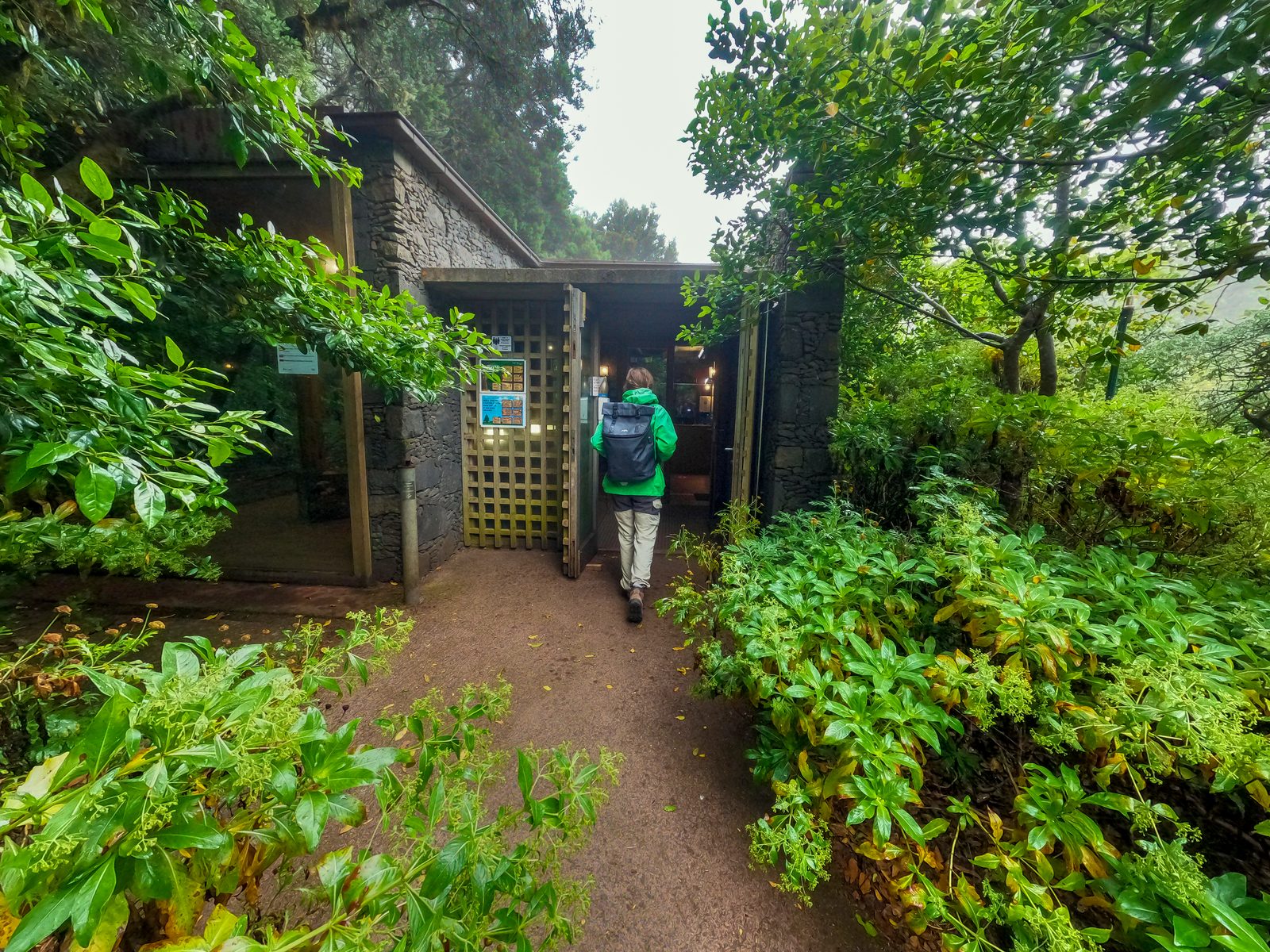
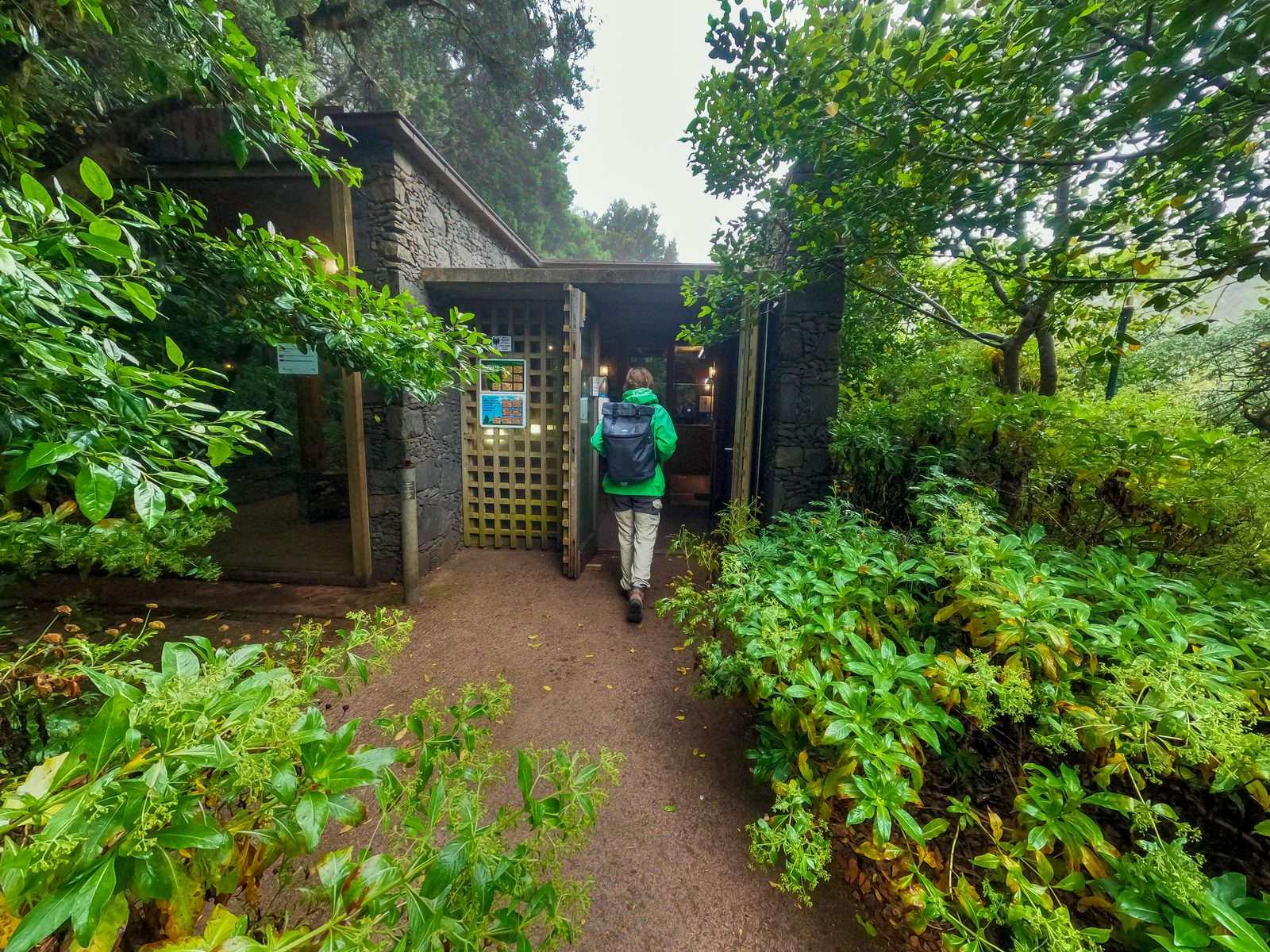
Centro de Información La Laguna Grande (GM-2, km 26.5) is a low single-storey park building with a full glass wall facing into the forest, used as a bird-observation window. Bolle's pigeon and the laurel pigeon are the laurel-forest species to watch for from it. Inside there is a staffed desk, laurisilva panels, trail maps and bird plates, with toilets alongside.
Entry is free and nothing needs booking, so you walk straight in. An official park guide is on duty for route advice, and this is where to confirm which Garajonay trails are actually open before you set off. It opens daily 08:30 to 16:30 and closes only on 25 December and 1 January.
The 900m loop into the laurisilva
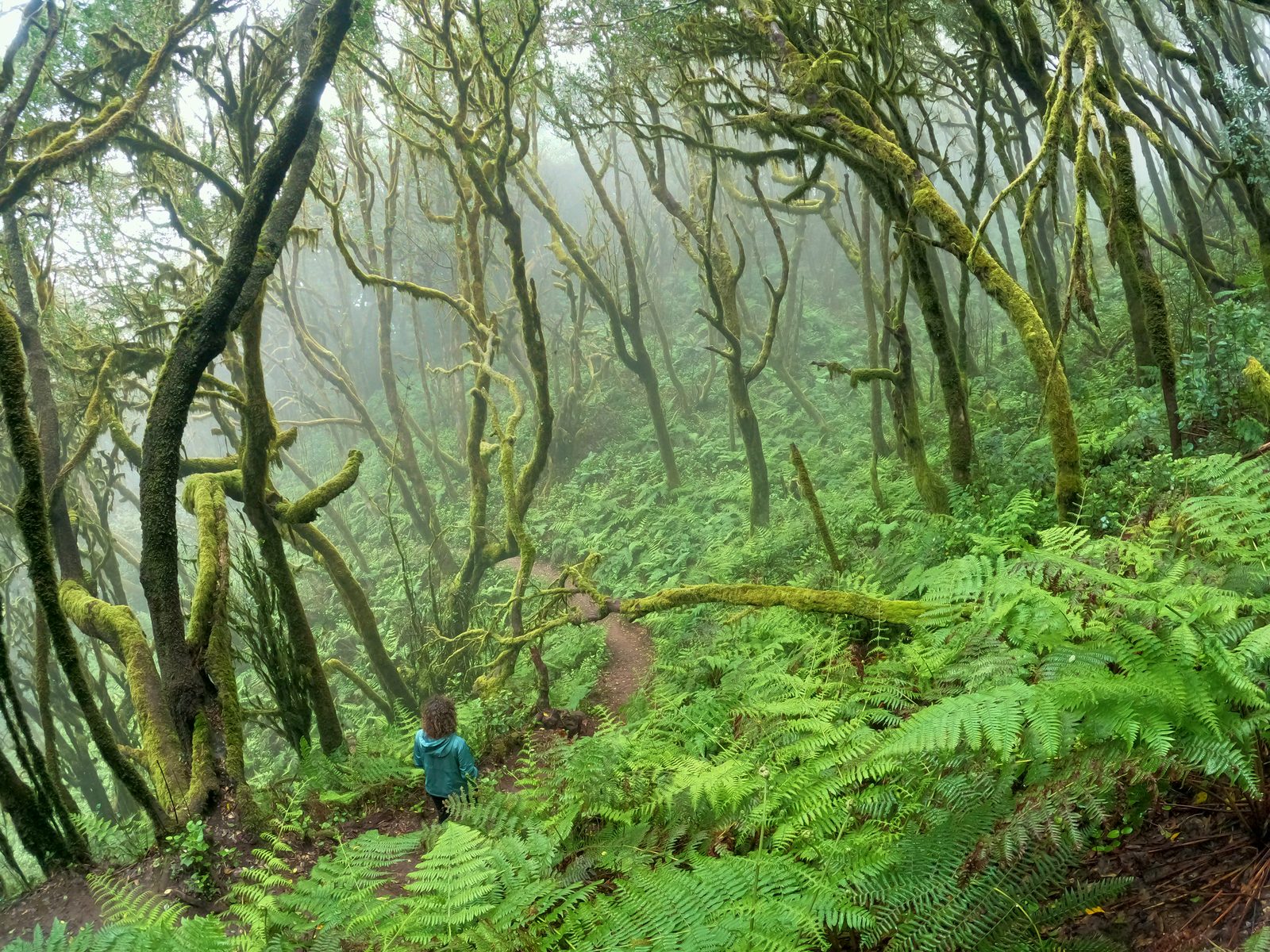
The Sendero circular de La Laguna Grande leaves the meadow car park and runs 900m of beaten earth straight into moss-hung fayal-brezal. Trunks are furred with green lichen and drip with fog. Boardwalk steps and a low wooden handrail carry the wet ground, and light comes down dappled through a closed canopy.
Twenty minutes covers it, and the path takes a pushchair, needs no permit and stays flat and wide the whole way. A longer version, Laguna Grande II, runs 3.8km and takes an hour and a half. Both begin and end at the car park, which is why I walk the short loop before anything else: it shows you what this forest is before you commit a half-day to a climb.
Trail 14 to Alto de Garajonay
Trail 14 starts at the Laguna Grande car park and climbs to Alto de Garajonay, the island's highest point at 1,487m. The round trip is 10km. Allow 3.5 to 4 hours, treat it as a half-day and wear proper footwear rather than whatever you drove up in.
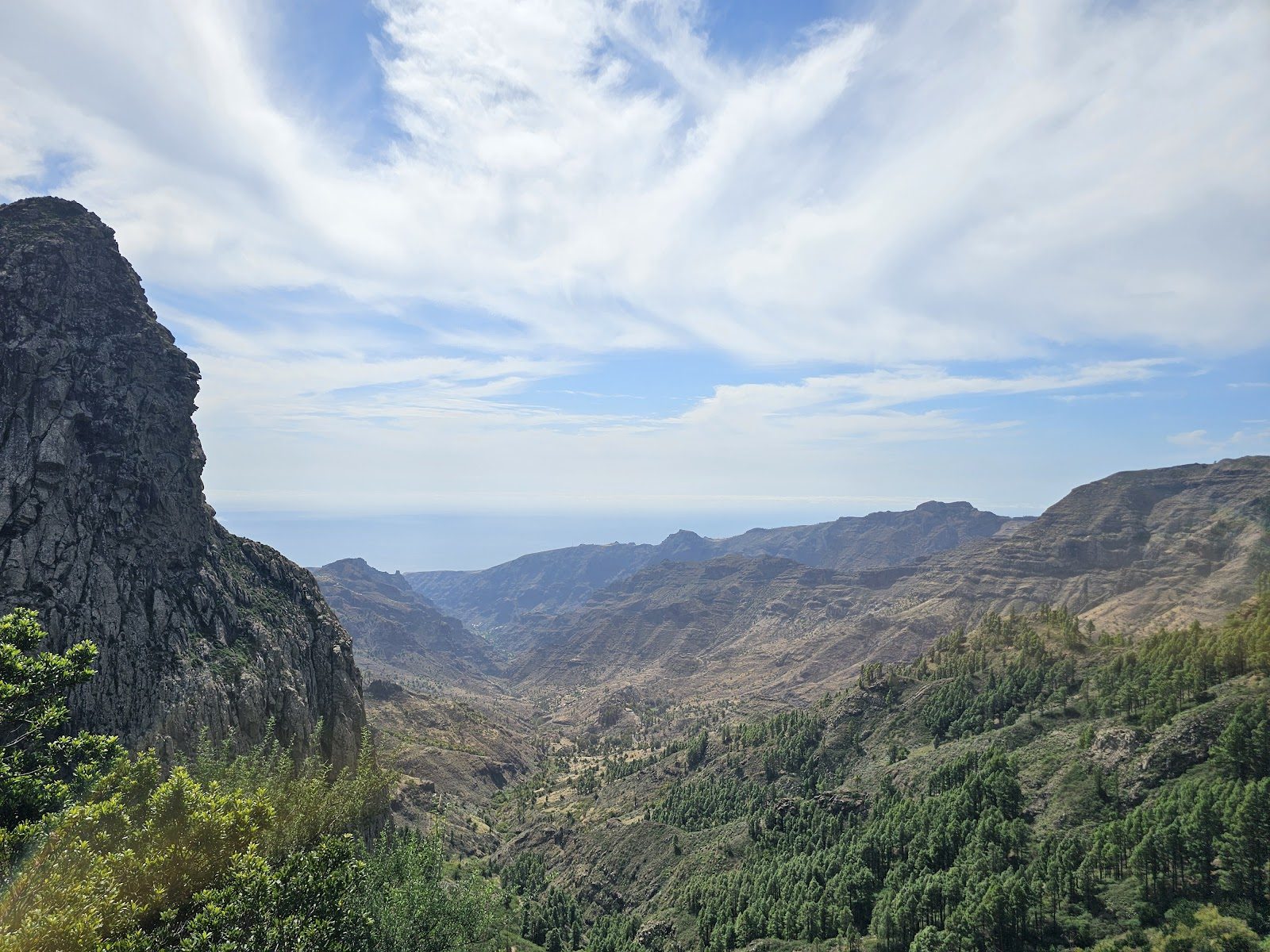
The summit is bare rock above the treeline, with a circular dry-stone viewing wall and an orientation plaque. There are aboriginal ritual remains up there as well. On a clear day Teide's cone floats across the sea to the north-east, La Palma and El Hierro stand to the west, and the whole laurel-forest plateau spreads out below.
It sits in cloud often enough that I would go up on the clear morning, not on the day the plan says. The summit is unticketed and unrestricted.
The Risquillos de Corgo cliff
The Las Creces and Risquillos de Corgo trail (Las Hayas) begins 4km west of Laguna Grande and runs 4.2km, an hour and a half, at low difficulty. The path is narrow earth through the Las Creces gardens of tall straight heath trunks, then opens at a cliff edge above the full green depth of the Vallehermoso valley, down to the sea. Horizontal mist streams sideways through the branches here.
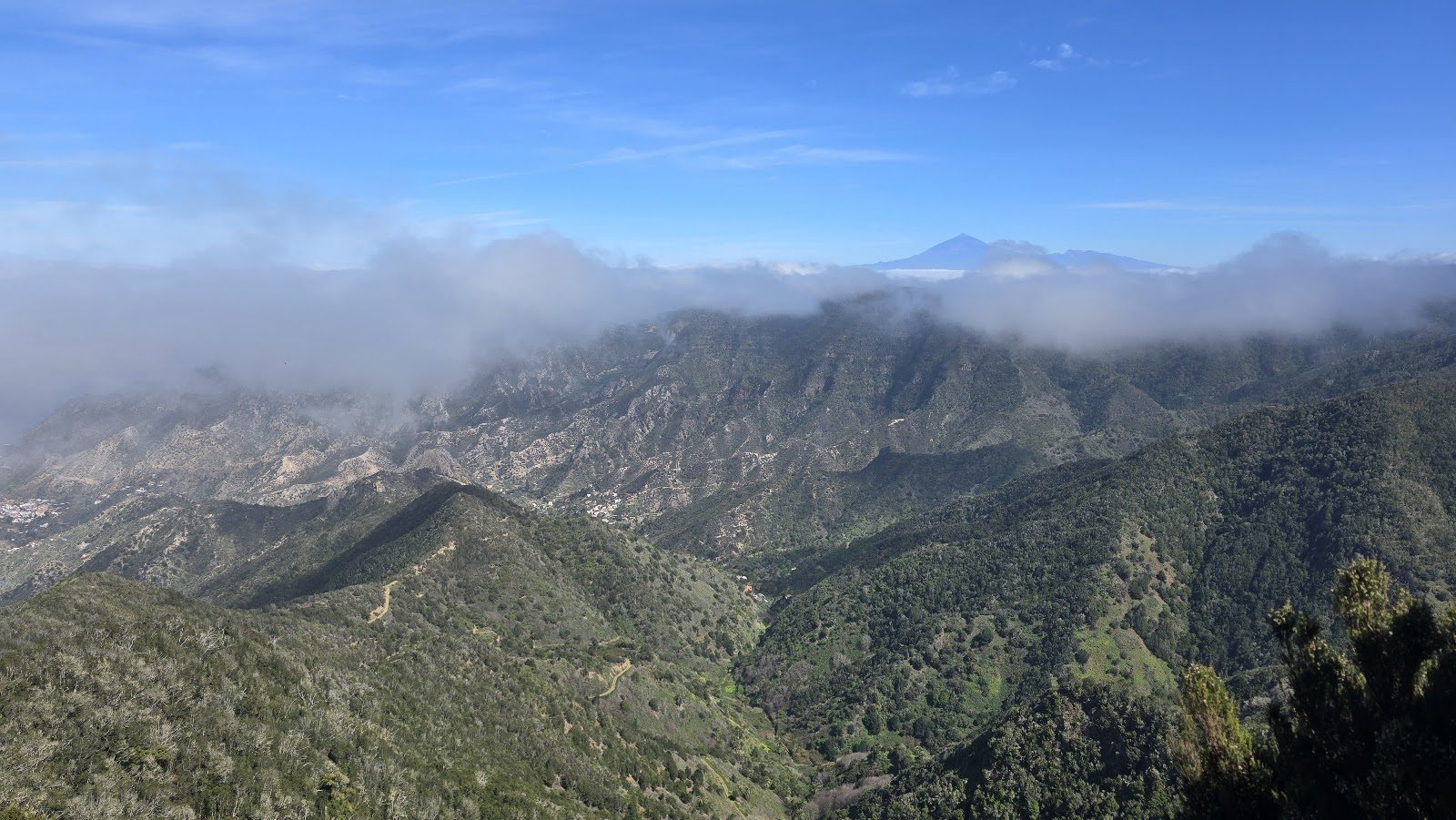
The one walk covers both sides of the park, dry fayal-brezal along the ridge and drenched laurisilva in the gully. It is free and open with no permit. Parking is roadside at Las Hayas rather than in a car park, and coaches drop and collect.
La Fortaleza and the church at Chipude
La Fortaleza de Chipude (Chipude) stands 8km south of Laguna Grande, a flat-topped volcanic table mountain rising to 1,241m above terraced fields, squared off like an altar in reddish rock. The pre-conquest Gomerans called it Argoday, 'the powerful', and used the summit as a sanctuary. The plateau on top is broad and bare, scattered with loose stone.
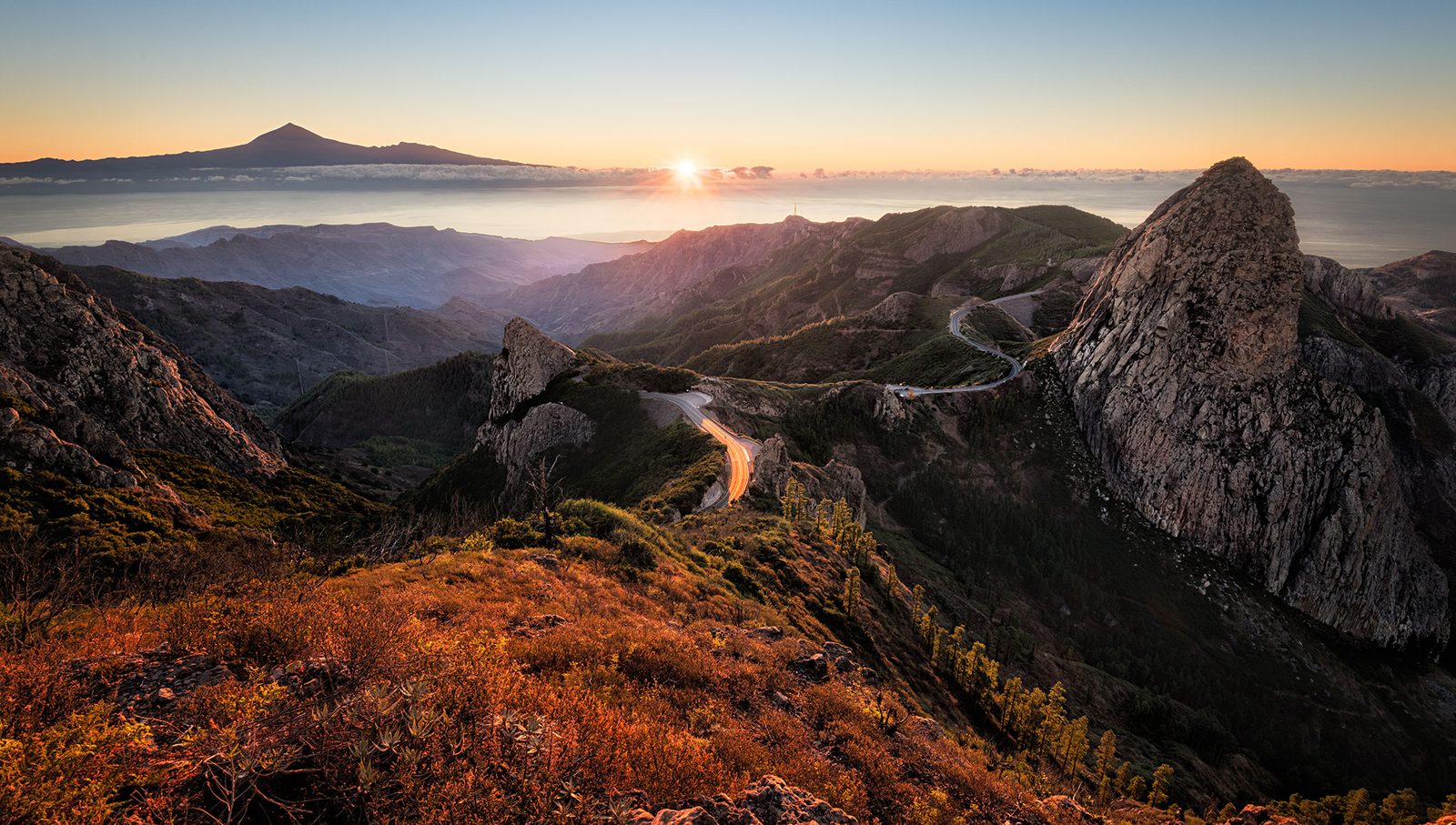
The climb is 3km return. Allow an hour to an hour and a half up a scrambling path on one flank, and wear shoes with real grip, because trainers will not hold on that rock. There is no gate and no fee.
Iglesia de Nuestra Señora de la Candelaria (Chipude village square) is a 7km detour from the clearing, whitewashed and two-naved, with dark stone quoins and a squat belfry on an open square at 1,000m. Fortaleza's flat top fills the view behind it. One of the oldest churches on La Gomera, it was built around 1530 to 1540 and has been a parish since 1655, and the island's own flag is kept here and carried in procession.
The interior is plain, with a gilded main retable and a Baroque colonial monstrance. Entry is free when the doors are open. Hours are informal and tied to Mass, so the square and the exterior are the dependable part of the visit. Ask locally before counting on getting inside.
Pottery at El Cercado
La Gomera's potters still build their vessels entirely by hand, with no wheel, a technique inherited from the first islanders. The Centro de Interpretación Las Loceras de El Cercado (El Cercado) lays that process out end to end, with shelves of unglazed red-brown hand-coiled jugs and bowls, a reconstructed wood-fired kiln, interpretive panels and a video of a locera shaping clay on her knees.
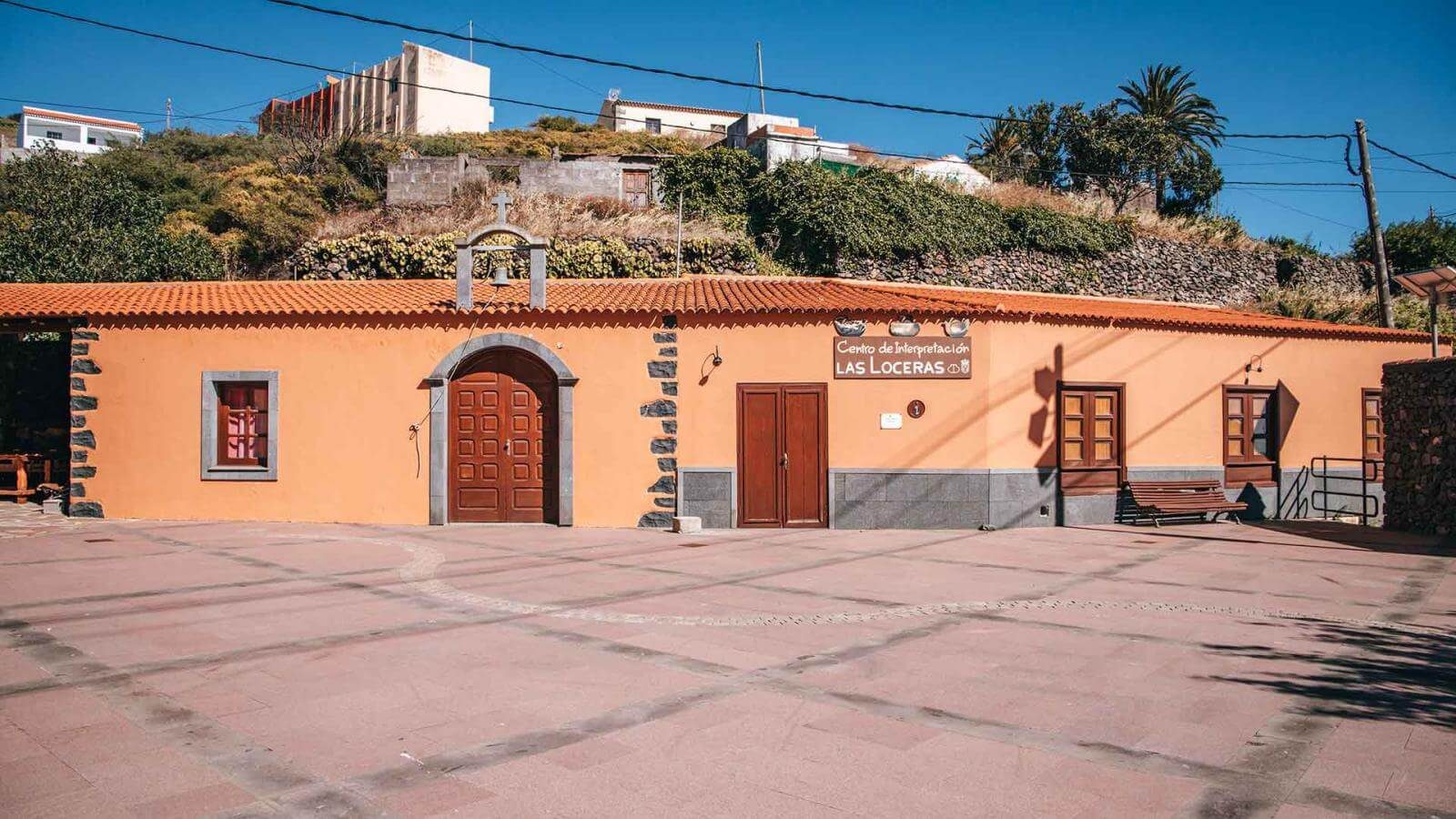
The rooms are small. It opens daily except Mondays, 09:30 to 13:30, and that morning-only window is the thing to plan the day around. Working workshops in the village take visitors as well.
Igualero and the whistled language
Mirador de Igualero and the Monumento al Silbo Gomero (Igualero) sit roadside at 1,321m, 9km from Laguna Grande. José Darias's 'el árbol que silba' is a rust-brown iron figure, standing, hand raised to its mouth in the whistler's finger position, facing out over the ravines. Silbo Gomero is the whistled language UNESCO lists as Intangible Cultural Heritage.
From the wall, La Fortaleza's flat top sits in the middle distance, with La Palma and El Hierro on the sea horizon. Of everything up here, this is the stop that explains why the island sounds different from the rest. The viewpoint is free, unenclosed and open 24 hours, and roadside parking is the limit on how many cars fit.
Eating in the clearing
Restaurante Laguna Grande (La Laguna Grande) is the only food inside the recreational area, a low stone-and-timber bar-restaurant at the forest edge with an open terrace of wooden tables facing the meadow. Grill smoke drifts over the tables. Plates come out as grilled meat and papas, with a jug of dark palm honey set down beside them.
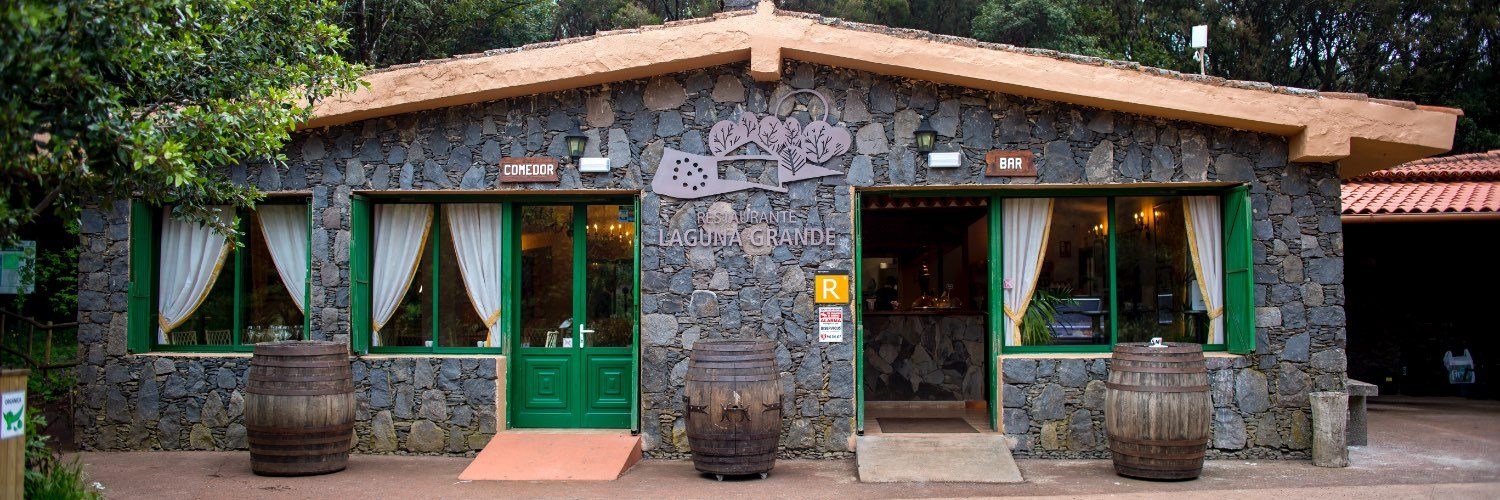
Fred. Olsen Express operates it, and the €18 fixed menu can be booked alongside ferry tickets. Island-tour coaches arrive with their menu and timing pre-arranged, so it works as a tour-coach canteen for much of the middle of the day. Come early or late if you want the terrace quiet. It opens between 09:00 and 10:00 and closes at 18:00, daily. €€.
The two kitchens at Las Hayas
La Montaña – Casa Efigenia (Plaza de los Eucaliptos, Las Hayas) sits 4km west of Laguna Grande, a modest family house under the eucalyptus trees on the square, with a simple wood-panelled dining room. The set meal arrives with no menu: bowls of watercress potaje, almogrote, gofio and papas arrugadas, led by vegetables grown in the kitchen's own gardens. Seventy years of home cooking have come out of this house, and a vegetarian set menu is unusual for Spain.
Service is slow and homespun. Parties of up to 10 can turn up unannounced; 10 or more have to ring 922 80 42 48 first. Open 08:00 to 20:00 daily. €€.
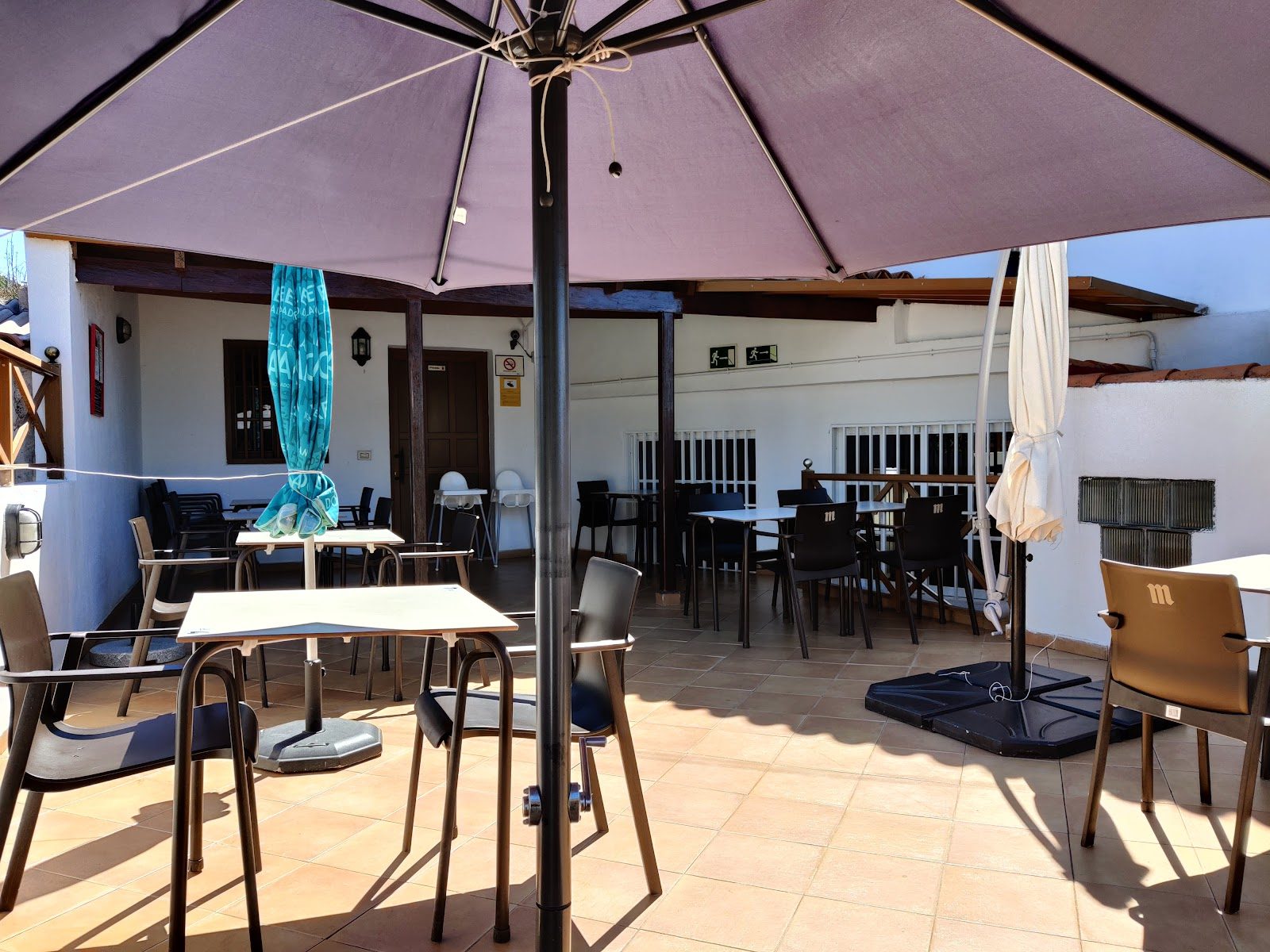
Bar-Restaurante Amparo (Las Hayas) is the meat kitchen in the same village, a small village bar with a terrace looking out over terraced ridges toward the sea and a plain tiled dining room behind it. Order the goat in sauce with papas arrugadas and the red and green mojo. The recipes are old and the produce comes from the gardens behind.
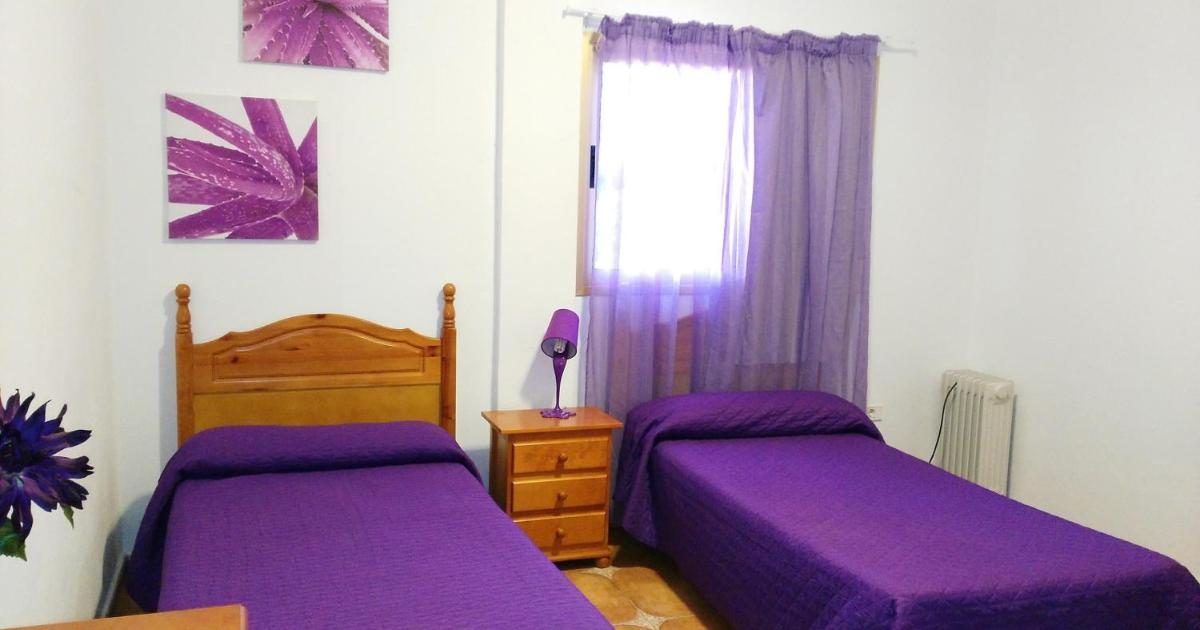
It also rents simple rooms and three self-catering cottages, so walkers can eat and sleep in the same place. €€.
Lunch and wine between El Cercado and Chipude
Bar Restaurante Victoria (Carretera General, El Cercado) stands a few hundred metres from the pottery centre, an unassuming roadside bar with the counter at the front and a handful of tables behind. Order from the board of almogrote and goat's cheese, the watercress soup or the goat stew, with a carafe of local white wine. Most visitors drive past it.
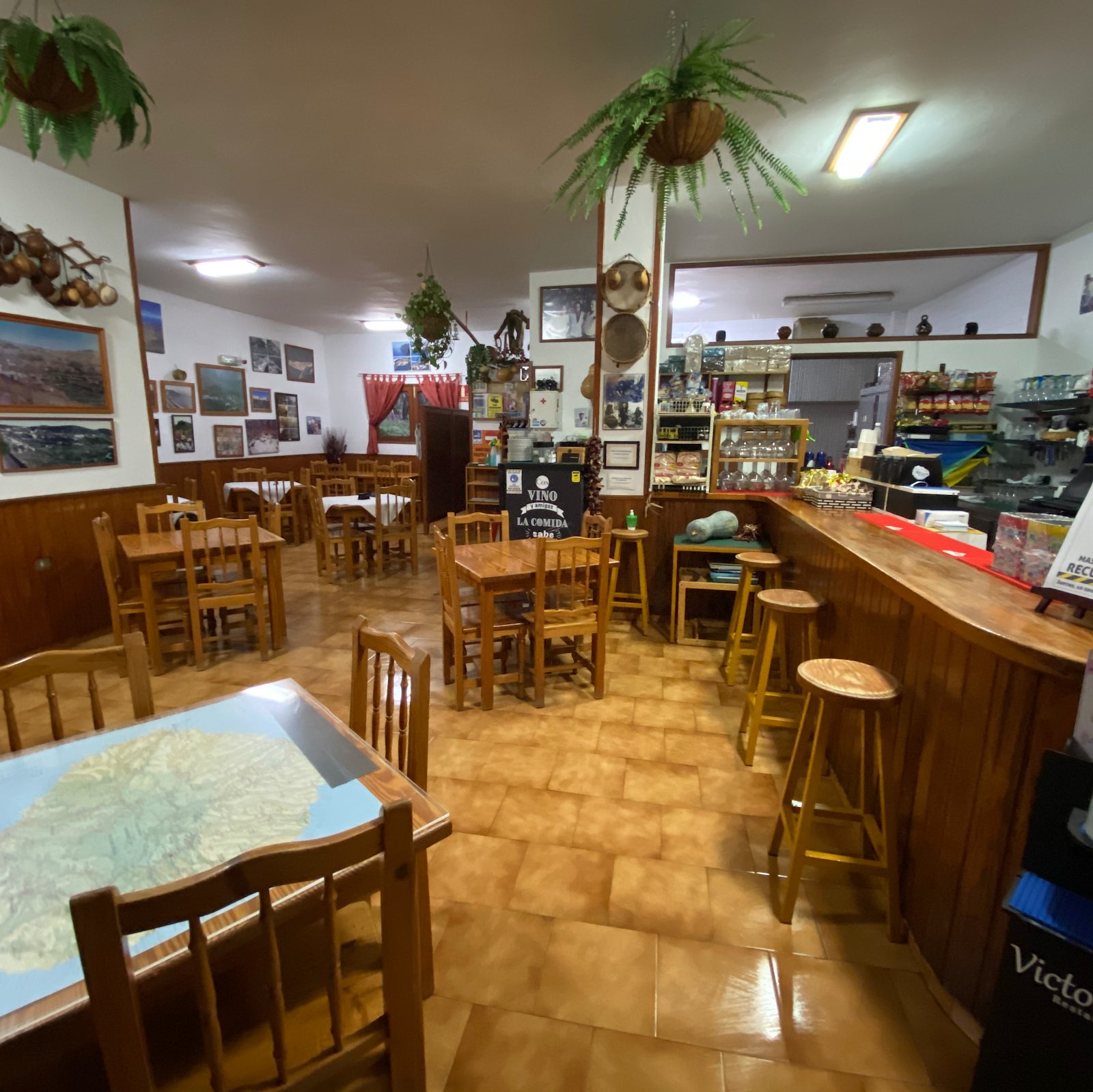
It opens at 10:00 and closes in the early evening, and the hours shift by day. Phone ahead for a lunch you are counting on; the place is family-run and genuinely small in the number of seats. €.
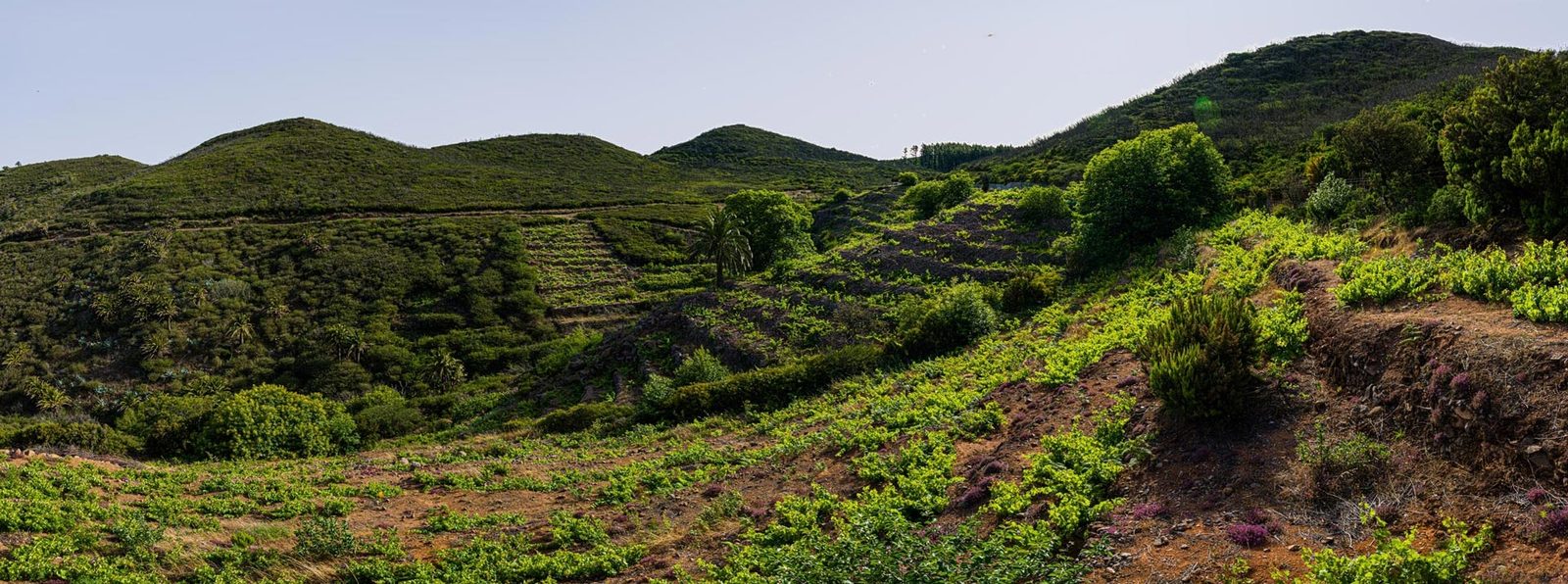
Bodega Altos de Chipude (Chipude) works Forastera Blanca Gomera, a grape grown here for 500 years and nowhere else, from vineyards at the altitude that gives it its taste. The winery is built into the hillside, with stainless tanks and a bottling line visible below and tasting tables on a mezzanine above the production floor, plus more outside the entrance. The pale 'Rajadero' white is poured with island cheese and palm honey.
Tastings are by appointment only, on +34 670 665 671 or [email protected], and they are capped at eight people per group. Book well ahead. €€.
Sleeping 500m from the park boundary
Jardín Las Hayas (Las Hayas) is 500m from the park boundary, six separate traditional Canarian buildings terraced into a garden hillside at 900m. White walls and timber, and each room has its own private terrace looking over the mountains to the sea and the neighbouring islands. Reception is not on site. It is 200m away at the Casa Efigenia restaurant, which also feeds guests.
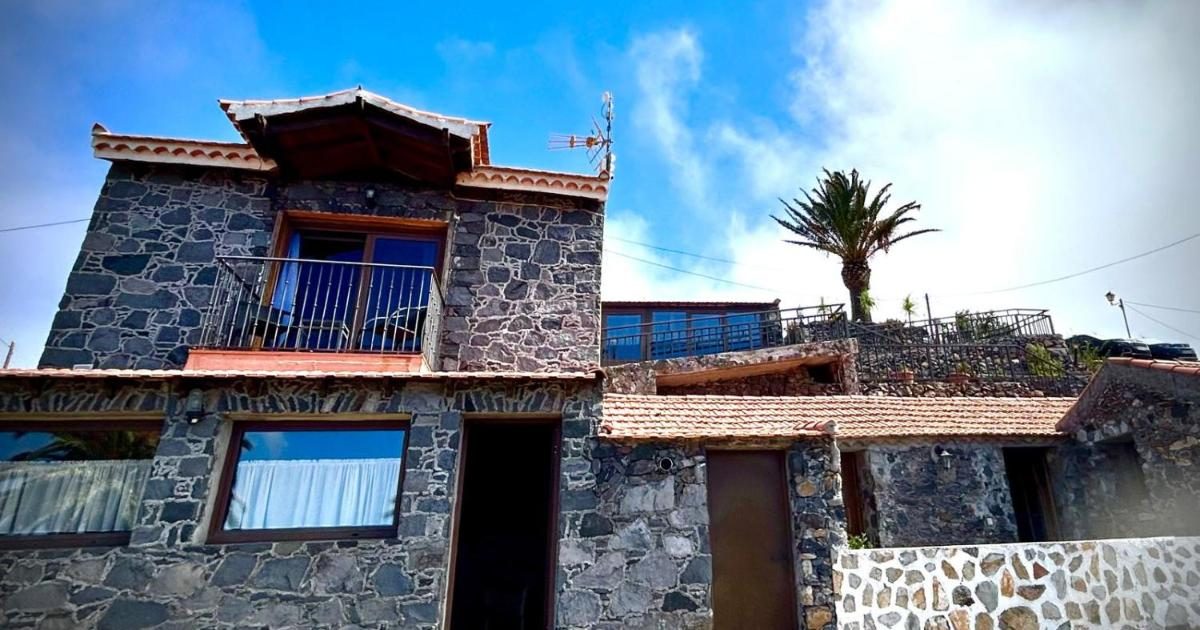
The reason to take it is being on the trails at dawn. Expect rural standards. Reviews run strong on the location and the quiet and weaker on the amenities. Six buildings fill up, so book early.
Opening days and booking
The pottery centre closes on Mondays and shuts at lunchtime, and the church keeps informal hours around Mass. Book the winery tasting before you travel, and check the fire-risk alert level before you plan to cook in the clearing.
See the La Gomera guide and the La Gomera hotel search.
Good to know
Laguna Grande — your questions
Do you pay to visit Laguna Grande or Garajonay National Park?
No. La Laguna Grande is open ground at any hour and costs nothing, and you can walk into the Centro de Información La Laguna Grande without booking. The short forest loop, Alto de Garajonay and the Las Creces trail are also free, and none of them needs a permit.
How long does it take to climb Alto de Garajonay from Laguna Grande?
Trail 14 starts at the Laguna Grande car park and runs 10km round trip to the 1,487m summit. Allow 3.5 to 4 hours, and wear proper footwear. The summit is often in cloud, so if you have a choice of mornings, take a clear one.
Can you have a barbecue at the Laguna Grande picnic area?
Stone barbecue stoves and long wooden picnic tables sit under the pines, but the Cabildo bans all grill use at fire-risk alert level 1, so check the alert level before you plan to cook. Nobody reserves the tables; you take whichever is empty.
Where can you eat inside the Laguna Grande recreational area?
Restaurante Laguna Grande is the only place to eat inside the area. It opens daily somewhere between 09:00 and 10:00 and closes at 18:00. Fred. Olsen Express runs it and sells an €18 fixed menu you can book with your ferry tickets. Island-tour coaches eat there, so come early or late if you want a quiet terrace.
Is there a short walk suitable for small children at Laguna Grande?
Yes. The Sendero circular de La Laguna Grande is a 900m loop of beaten earth, flat and wide enough for a pushchair, and it starts and finishes at the car park. It takes about 20 minutes. There is also a 3.8km version, Laguna Grande II, which takes an hour and a half.
Gallery